
What's Happening?
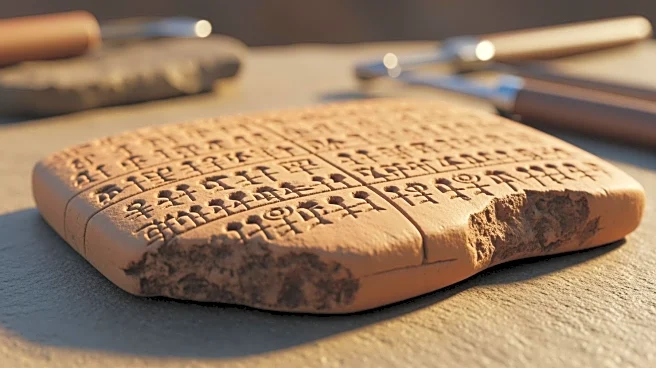
A significant archaeological discovery has been made in Jerusalem, where an Assyrian cuneiform seal was unearthed. This seal is believed to date back to the eighth century B.C.E. and is thought to have
been used to seal a letter of complaint from Assyrian overlords to the King of Judah. The discovery was made by Ayala Zilberstein, an excavation director with the Israel Antiquities Authority. The seal's presence suggests a historical context of political and economic interactions between the Assyrian Empire and its vassal states, including Judah. This find adds to the understanding of the complex relationships and communications that existed in the ancient Near East.
Why It's Important?
The discovery of the Assyrian cuneiform seal in Jerusalem is significant as it provides tangible evidence of the political dynamics and administrative practices of the ancient Assyrian Empire. Such artifacts help historians and archaeologists piece together the nature of Assyrian control over its vassal states, including the mechanisms of governance and diplomacy. This find could offer insights into the economic and political pressures faced by the Kingdom of Judah, contributing to a broader understanding of the region's history. The seal also underscores the importance of archaeological research in uncovering the intricacies of ancient civilizations and their interactions.
What's Next?
Further analysis of the Assyrian cuneiform seal is expected to provide more detailed information about its origins and the specific nature of the communication it sealed. Archaeologists may conduct additional excavations in the area to uncover more artifacts that could offer further insights into the Assyrian-Judah relationship. The findings could prompt new scholarly discussions and research into the political history of the region, potentially leading to revised interpretations of historical events and interactions.
Beyond the Headlines
The discovery of the seal highlights the ongoing relevance of archaeology in understanding ancient political systems and their legacies. It raises questions about the influence of powerful empires on smaller states and the ways in which these relationships shaped historical narratives. The find also illustrates the potential for archaeological sites to reveal unexpected connections between past and present, offering lessons on governance, diplomacy, and cultural exchange that remain pertinent today.