









What's Happening?
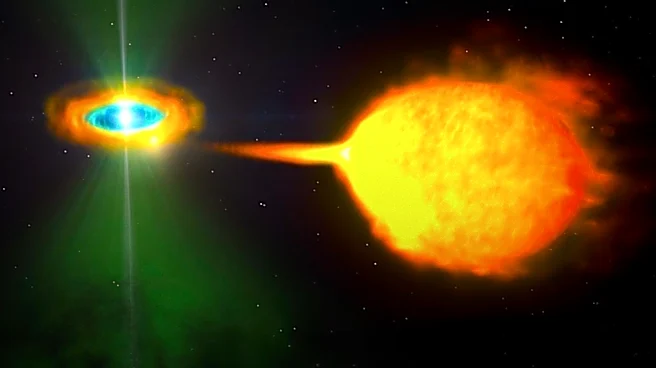
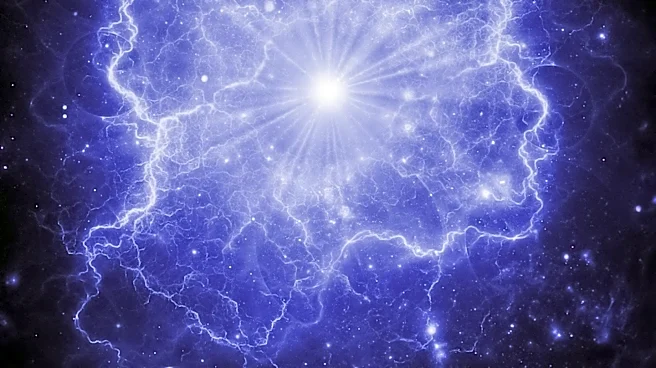
A study has linked the formation of exceptionally bright supernovae to the exchange of matter between binary stars. This process creates a dense shell of gas and dust around the stars, which intensifies the brightness of the supernova when the shockwave
from the explosion collides with it. The research, conducted by the Academia Sinica Institute of Astronomy and Astrophysics, used computer simulations to demonstrate the importance of timing in the mass transfer process for the formation of these interacting supernovae.
Why It's Important?
The findings provide a deeper understanding of the mechanisms behind some of the universe's most luminous explosions. By identifying the conditions that lead to interacting supernovae, scientists can better predict and study these events, which play a crucial role in the distribution of elements across the cosmos. This research enhances our knowledge of stellar evolution and the complex interactions within binary star systems, contributing to the broader field of astrophysics.