



What's Happening?
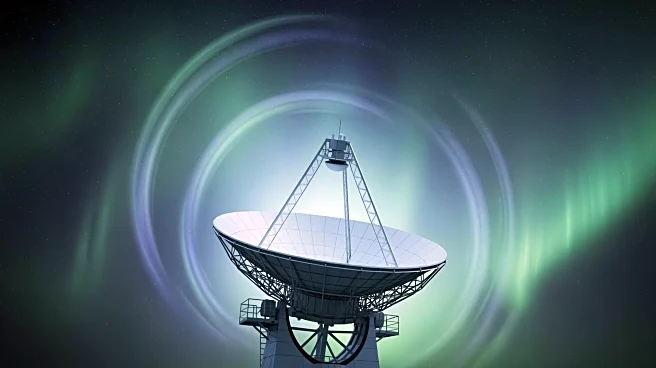
A new study by researchers at the SETI Institute suggests that 'space weather' could be distorting signals from extraterrestrial sources, potentially preventing their detection on Earth. The study, published in The Astrophysical Journal, examines how
plasma density fluctuations and coronal mass ejections near stars can broaden radio wave signals, making them difficult to detect with current search methods. Traditional searches for alien contact focus on narrow frequency spikes, but the study indicates that these signals may be broadened by stellar activity, slipping below detection thresholds.
Why It's Important?
This research is crucial for refining the search for extraterrestrial intelligence. By understanding how space weather affects signal transmission, scientists can develop more effective search strategies that account for these distortions. This could increase the likelihood of detecting alien communications, advancing our understanding of the universe and our place within it. The study also highlights the need for adaptive search techniques that consider the dynamic nature of space environments.
What's Next?
The researchers propose adapting search strategies to look for signals that are slightly wider than traditionally expected. This approach could improve the chances of detecting alien communications by accounting for the effects of space weather. Future research will focus on refining these strategies and testing them with different types of stars, potentially leading to breakthroughs in the search for extraterrestrial life.