







What's Happening?
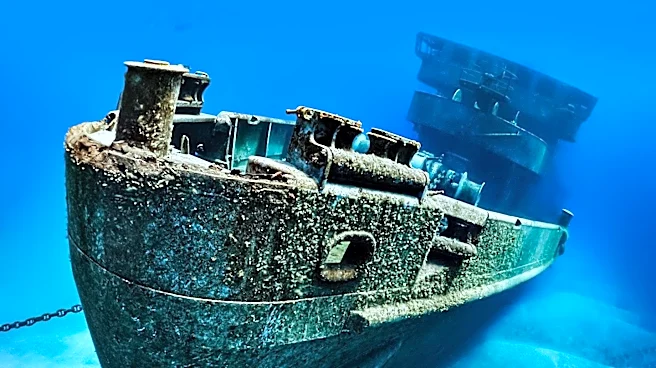
The shipwreck of the Batavia, a flagship of the Dutch East India Company that sank in 1629, is shedding new light on the trade practices of the era. Recent studies have revealed that the ship was carrying large sandstone blocks sourced from multiple quarries
in Germany, highlighting a complex supply chain. These findings illustrate the logistical sophistication of the Dutch East India Company, which consolidated and transported building materials across vast distances to support colonial infrastructure. The Batavia's cargo, intended for construction in Batavia (now Jakarta), underscores the global reach and coordination of trade networks during the early stages of global capitalism.
Why It's Important?
The discovery of the Batavia's cargo provides valuable insights into the early mechanisms of global trade and the operational capabilities of one of the world's first multinational corporations. Understanding these historical trade practices can inform current discussions on globalization and supply chain management. The study highlights the interconnectedness of regions and the role of trade in shaping economic and political landscapes, offering lessons on the importance of efficient logistics and resource management.
Beyond the Headlines
The Batavia's story is not only about trade but also about the darker aspects of colonial history, including mutiny, murder, and slavery. The shipwreck serves as a reminder of the human cost of colonial expansion and the complex legacy of the Dutch East India Company. The ongoing research into the Batavia continues to reveal new stories, contributing to a more nuanced understanding of history and its impact on contemporary society.