
What's Happening?
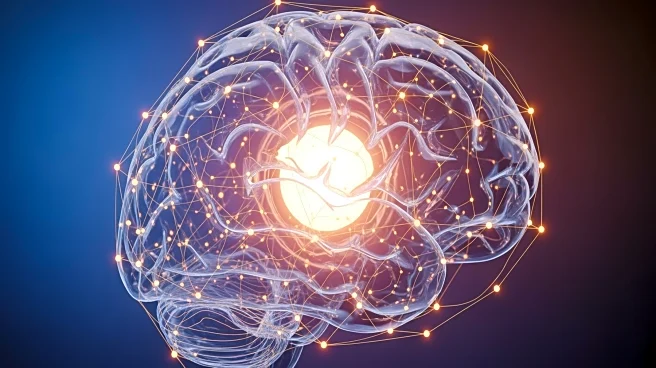
Researchers from the University of Reading and the Netherlands Institute for Neuroscience have discovered eight body-like maps in the visual cortex that organize visual information similarly to how the brain
processes touch. This finding reveals that when people observe others, their brains partially feel the actions, emotions, and intentions of those they watch. The study utilized brain scans of participants watching movie clips to identify these maps, which are organized in a head-to-toe manner similar to the somatosensory cortex. This discovery highlights the brain's ability to connect visual input directly to bodily sensation, suggesting a fundamental link between sight and touch.
Why It's Important?
The discovery of these brain maps has significant implications for understanding human empathy and could influence future research in social psychology and clinical care. It may help develop new treatments for individuals with conditions like autism, who may struggle with processing such information. Additionally, the findings could advance neurotechnology and artificial intelligence by providing insights into how the brain integrates bodily experiences with visual information. This could lead to more sophisticated AI systems that better understand human emotions and actions, enhancing human-computer interaction and potentially leading to new therapeutic applications.