


What's Happening?
Oregon's U.S. Senators Jeff Merkley and Ron Wyden have announced that the U.S. Department of Housing and Urban Development (HUD) is allocating over $9.8 million to support affordable housing initiatives for Tribal members in Oregon. The funding will be distributed
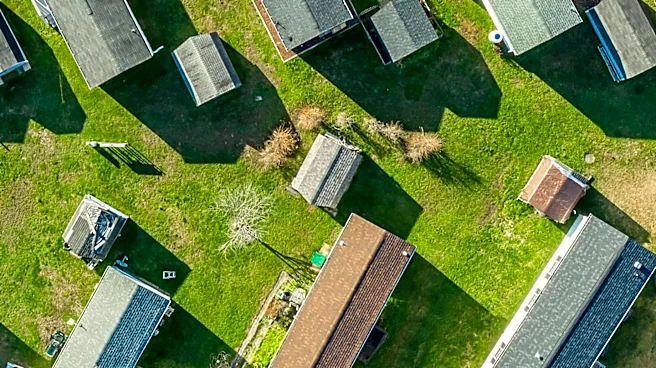
to two specific entities: the Cow Creek Band of Umpqua Tribe of Indians and the Warm Springs Housing Authority. The Cow Creek Band of Umpqua Tribe of Indians is set to receive more than $4.9 million for the construction of seven new single-family homes and the necessary infrastructure for an additional housing project. Concurrently, the Warm Springs Housing Authority will receive $5 million to build seven new three-bedroom homes specifically for low-income families. This federal investment is part of the Indian Housing Block Grant Competitive Program, which aims to provide financial resources to eligible tribes and Tribally Designated Entities for affordable housing and rehabilitation projects within Tribal communities.
Why It's Important?
This federal funding is critically important for addressing the significant affordable housing shortages faced by Tribal communities in Oregon and across the nation. Access to safe, stable, and affordable housing is a fundamental human right and a key determinant of health, economic stability, and overall well-being. For Tribal nations, these investments are vital for fostering community development, preserving cultural heritage, and ensuring that members can thrive within their ancestral lands. The funding will not only provide much-needed homes but also support essential infrastructure development, which is often lacking in underserved Tribal areas. By prioritizing new construction and housing rehabilitation, the program directly tackles the root causes of housing insecurity, empowering Tribal governments to build stronger, more resilient communities and improve the quality of life for their citizens. This initiative underscores a commitment to rectifying historical disparities and supporting self-determination for Indigenous populations.
What's Next?
The allocated funds will be utilized by the Cow Creek Band of Umpqua Tribe of Indians and the Warm Springs Housing Authority to commence or continue their respective housing projects. This includes the construction of new single-family homes and three-bedroom residences for low-income families, along with associated infrastructure development. The success of these projects could serve as a model for future federal investments in Tribal housing. Senators Merkley and Wyden have indicated their continued commitment to advocating for federal resources for Tribal nations, suggesting that similar funding opportunities may arise in the future. The implementation of these projects will likely involve collaboration between Tribal authorities, HUD, and local contractors, with an emphasis on efficient and culturally appropriate development. The long-term impact will be monitored to assess improvements in housing conditions and community well-being within these Tribal areas.
Beyond the Headlines
The provision of affordable housing in Tribal communities extends beyond mere shelter; it is deeply intertwined with issues of sovereignty, self-determination, and cultural preservation. Many Indigenous communities have historically faced systemic underinvestment and displacement, leading to chronic housing crises. This funding represents a step towards addressing these historical injustices and empowering Tribal nations to control their own development and future. By supporting housing initiatives, the federal government acknowledges the unique needs and rights of Indigenous peoples. Furthermore, stable housing can lead to improved educational outcomes, better health, and increased economic opportunities, contributing to a more holistic and sustainable community development. This initiative also highlights the ongoing efforts to strengthen the government-to-government relationship between the U.S. federal government and Tribal nations, recognizing their inherent sovereignty and the importance of supporting their self-governance.