






What's Happening?
Bali is introducing new green tourism rules across its popular resort areas, including Canggu, Uluwatu, and Ubud. These regulations, driven by the government's focus on spatial and environmental planning, aim to promote quality tourism. The new plan mandates
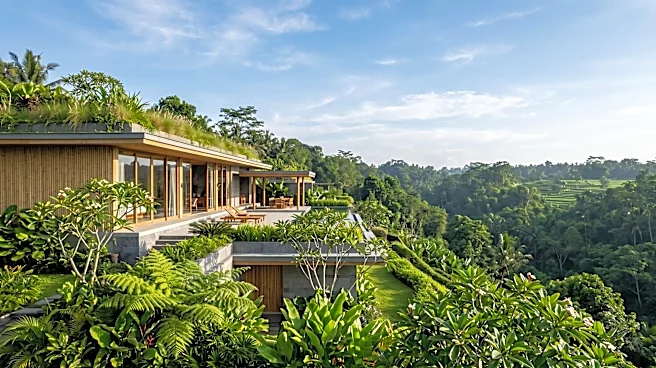
stricter development controls and environmental measures for tourism projects, particularly in the Badung and Gianyar regions. Under these new conditions, boutique resorts and villa developments in southern coastal and cultural tourism areas must incorporate closed-loop waste management systems and maintain a minimum of 40% open green space. This initiative is part of a broader provincial effort to strengthen environmentally focused tourism, with Bali's governor designating five areas, including Ubud, Nusa Dua, and Kuta, as low-emission tourism zones in August 2026. The program encompasses green energy, green mobility, ecosystem protection, reduced single-use plastics, and community participation.
Why It's Important?
These new green tourism regulations in Bali signify a significant shift towards sustainable development within the tourism industry. By requiring closed-loop waste management and substantial open green spaces, the government aims to mitigate the environmental impact of rapid tourism expansion. This approach could serve as a model for other popular tourist destinations grappling with similar challenges, influencing global tourism practices towards greater ecological responsibility. For U.S. travelers, while there are no new entry requirements, they can expect to encounter accommodations designed with enhanced environmental features, such as waste separation and resource recovery. This could lead to a greater awareness and demand for eco-friendly travel options, potentially influencing the offerings of U.S. travel agencies and tour operators specializing in international destinations. The emphasis on preserving natural landscapes and cultural integrity also aligns with a growing global trend of conscious travel, which could impact how U.S. tourists choose their destinations and accommodations.
What's Next?
The immediate impact of these regulations will primarily be on the development and operation of new accommodation and tourism facilities in Bali. Travelers visiting from 2026 onwards, particularly those staying in newly developed properties, will likely experience facilities designed with these environmental considerations in mind, such as advanced waste management and extensive green spaces. The provincial government's ongoing commitment to quality tourism, which integrates environmental and cultural concerns, suggests a continued evolution of these policies. Future developments may include further incentives for existing businesses to adopt greener practices and potentially more stringent requirements for various aspects of tourism infrastructure. Stakeholders, including local communities, environmental groups, and international tourism organizations, will likely monitor the effectiveness of these measures in balancing economic growth with environmental preservation. The success of Bali's initiative could also inspire other regions to adopt similar sustainable tourism frameworks.
Beyond the Headlines
Beyond the immediate environmental benefits, Bali's green tourism initiative carries deeper implications for the cultural and economic landscape of the region. By emphasizing ecosystem protection and community participation, the policy aims to safeguard Bali's unique cultural heritage and natural beauty, which are central to its appeal. This approach acknowledges the delicate balance between economic development through tourism and the preservation of local identity and resources. The focus on low-emission zones and reduced single-use plastics could also foster innovation in sustainable technologies and practices within the hospitality sector, potentially creating new economic opportunities for local businesses. Furthermore, the initiative could influence traveler behavior, encouraging a more mindful and responsible approach to tourism globally. It highlights a growing recognition that the long-term viability of popular tourist destinations depends on proactive environmental stewardship and a commitment to sustainable practices, moving beyond superficial 'greenwashing' to implement tangible, measurable changes.