




What's Happening?
Essex County in New York state has emerged as a significant leader in direct-to-consumer (D2C) farm sales, ranking second statewide with 33% of its 244 farms selling directly to customers. This figure is highlighted in the executive summary of the Farmland
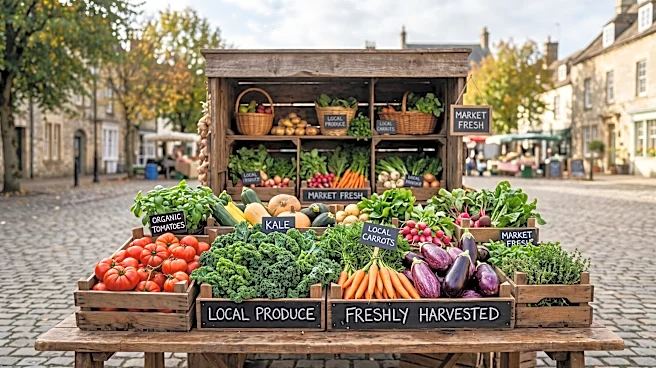
Protection and Food System Plan. Cole Trager, agriculture and local food team leader at Cornell Cooperative Extension, describes this as a major untold story for the region. These D2C sales, which include meat, dairy, and vegetables, occur through various channels such as CSA shares, farmers' markets, on-farm stores, and online orders. A substantial portion of these sales remains within the region, indicating that the food produced locally is also consumed locally. The Northeast region, including New York, is a national frontrunner in D2C sales, accounting for approximately 28% of the total U.S. market. While Suffolk County on Long Island holds the top spot in New York, Essex County is a close second, with Franklin County also showing significant growth in D2C farms.
Why It's Important?
The prominence of direct-to-consumer sales in Essex County signifies a vital role in the region's economic stability and rural vitality. This model fosters a direct relationship and 'cross-participation' between consumers and producers, contrasting with the more detached urban and suburban food systems. It ensures that healthy, locally produced food remains within the community, contributing to food security and supporting local farmers. Many of these farms are 'values-driven,' prioritizing factors beyond just profit, such as protecting rare livestock genetics or sustainable seed sourcing. This approach helps maintain a diverse agricultural landscape and promotes farming practices that are often more environmentally conscious. The success of D2C sales also highlights a shift towards more localized supply chains, reminiscent of earlier agricultural models, which can offer greater resilience against global supply chain disruptions and climate-related challenges.
What's Next?
The continued growth and success of direct-to-consumer farming in Essex County suggest a potential model for other regions seeking to enhance local food systems and rural economies. Efforts to bridge socioeconomic and sociocultural divides in food access will be crucial, with initiatives like ADK Action and 'Gifting Forward Abundance' aiming to make locally sourced food more widely available. The focus will likely remain on strengthening the relationship between farmers and consumers, fostering community engagement through events like 'Farm Food Fridays' and farm tours. As climate change poses increasing threats to global food systems, the hyperlocal nature of Essex County's agriculture could serve as a blueprint for building more resilient and sustainable food networks. Continued investment in climate-smart agriculture and practices that prioritize environmental and social sustainability will be key to the long-term viability of these mission-driven farms.
Beyond the Headlines
The rise of direct-to-consumer farming in Essex County reflects a broader societal trend towards valuing local production, community connection, and sustainable practices. This model challenges the commercialization and monocropping that became prevalent after the mid-20th century, offering an alternative that prioritizes ecological health and community well-being. The 'values-driven' nature of many of these farms indicates a deeper ethical dimension, where farmers consider the environmental impact, animal welfare, and social benefits alongside economic returns. This approach fosters a sense of shared responsibility and mutual support between producers and consumers, moving beyond a purely transactional relationship. The success in Essex County also underscores the importance of regional characteristics, such as the milder weather in the Lake Champlain Valley, which supports a concentration of small farms despite a limited growing season. This localized agricultural boom in the Adirondacks suggests a potential for similar 'ecosystems' to thrive elsewhere, promoting rural vitality and a more holistic approach to food production.