




What's Happening?
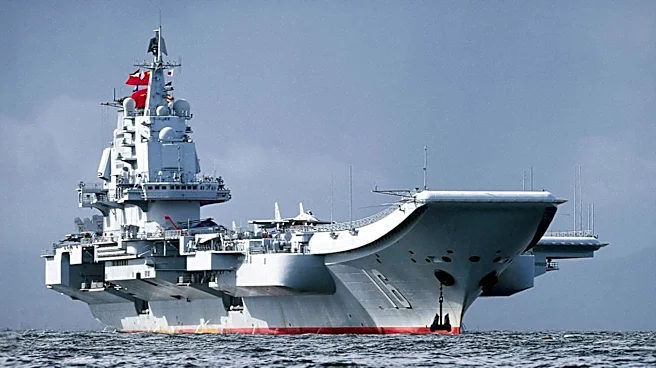
China's military has been conducting extensive target practice in its western deserts, using full-scale mockups of U.S. Navy aircraft carriers and other warships. This activity is part of a broader military expansion and modernization effort aimed at hindering
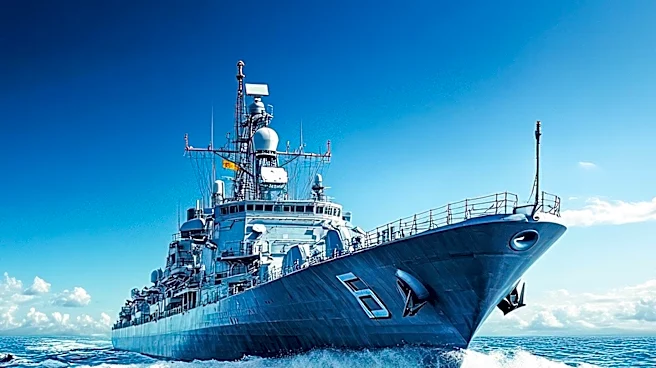
the U.S. military's ability to project power into regions near China, particularly the First Island Chain and the South China Sea. The People's Liberation Army (PLA) has developed advanced anti-access/area-denial (A2/AD) systems, including the Dongfeng DF-21D missile, specifically designed to target and destroy U.S. Navy aircraft carriers. Satellite imagery from 2021 and 2024 has revealed sophisticated target testing complexes, some featuring moving ship targets and increasingly detailed replicas of U.S. warships, including the Gerald R. Ford-class carrier. These desert tests provide critical training for missile crews and insights for weapons designers, simulating real-world scenarios for their carrier-killing weapons.
Why It's Important?
This development signifies a direct and escalating threat to U.S. naval power projection and regional stability. The ability of China to accurately target and potentially destroy U.S. aircraft carriers, which are central to American military strategy, could fundamentally alter the balance of power in the Indo-Pacific. The sophisticated nature of these mockups and the continuous testing indicate a serious commitment by China to develop capabilities that could challenge U.S. military dominance. This could force the U.S. to reconsider its naval deployments and strategies in contested areas like the South China Sea and the Taiwan Strait, potentially leading to increased defense spending and a heightened arms race in the region. The implications extend to global security, as a weakened U.S. ability to project power could embolden other adversaries and destabilize international relations.
What's Next?
The U.S. will likely continue to monitor China's military advancements closely, potentially accelerating its own development of countermeasures and defensive technologies. This could include investments in advanced missile defense systems, enhanced electronic warfare capabilities, and new strategies for naval operations in contested environments. There may also be increased diplomatic efforts to address China's military expansion and its implications for regional security. China, in turn, is expected to continue refining its A2/AD capabilities, potentially developing even more advanced anti-ship weapons and expanding its testing infrastructure. The ongoing military modernization and testing activities suggest a long-term strategic competition between the U.S. and China, with potential for increased tensions and a greater risk of miscalculation in the future.
Beyond the Headlines
The practice of targeting mock U.S. warships in the desert highlights a deeper strategic shift: China's move from a regional defense posture to one capable of challenging a global superpower. This isn't just about military hardware; it's about a psychological and strategic reorientation. The desert, with its flat, open terrain, serves as an ideal, controlled environment to perfect these weapons, mirroring the conditions at sea. This methodical approach to military development suggests a long-term vision for China's role in global security. The ethical implications of simulating attacks on another nation's assets, even in training, could further strain international relations and contribute to a climate of distrust and potential conflict. It also raises questions about the future of naval warfare and the vulnerability of large, expensive capital ships in an era of advanced precision-guided munitions.