




What's Happening?
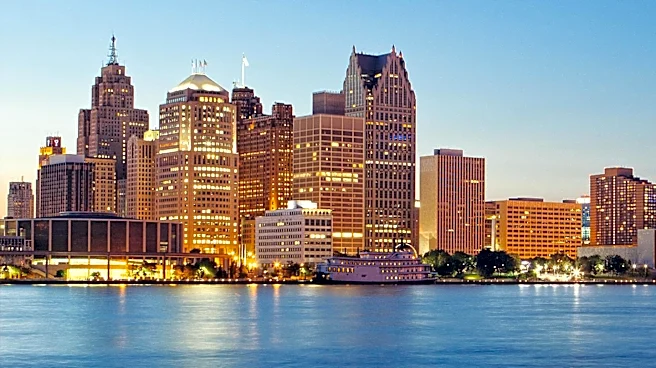
The state of Michigan has announced an $89 million investment aimed at restoring the Detroit and Kalamazoo rivers. This commitment was revealed on Detroit's Belle Isle by Governor Gretchen Whitmer and EGLE Director Phil Roos. Director Roos acknowledged
that both rivers have suffered from a legacy of industrial contamination, some dating back over a century. Governor Whitmer emphasized the state's identity being defined by water and the responsibility to protect all its water bodies, from the Great Lakes to local rivers. Of the total funding, $50 million is allocated for cleaning polychlorinated biphenyls (PCBs) in the Detroit River, $25 million for the restoration of the Kalamazoo River, and $14 million for various restoration projects across the state. The funds will be utilized for sediment cleanup, restoring fish and wildlife habitats, and expanding boating access. The work is set to begin immediately and will span over the next 15 years.
Why It's Important?
This substantial investment is critical for the ecological health and economic vitality of Michigan's waterways and the communities they support. The cleanup of PCBs in the Detroit River addresses a long-standing environmental hazard that poses risks to human health and aquatic ecosystems. Similarly, the restoration of the Kalamazoo River, which has also faced significant contamination, will contribute to the recovery of its natural habitats and improve water quality. These efforts are vital for protecting biodiversity, ensuring safe recreational opportunities, and supporting local economies that rely on healthy rivers. The long-term commitment of $89 million over 15 years signifies a comprehensive approach to environmental remediation, acknowledging the complexity and scale of historical industrial pollution. This initiative also aligns with broader national goals of environmental justice and restoring natural resources in historically impacted areas.
What's Next?
The restoration work on the Detroit and Kalamazoo rivers will commence immediately, with the $89 million investment being disbursed over the next 15 years. The initial phase will involve investigation to determine the most effective strategies for sediment removal and addressing contamination. EGLE Director Phil Roos mentioned specific sites, such as Harbortown and areas near the Rouge River, as potential targets for cleanup in the Detroit River. The projects will focus on sediment cleanup, habitat restoration for fish and wildlife, and enhancing public access for boating. Community members, such as Esperanza Smith of the Detroit Riverfront Conservancy, have expressed hope and excitement for the future of the rivers, highlighting the long-term positive impact of this investment on the environment and local communities. The success of these projects will depend on sustained effort and effective collaboration between state agencies and local stakeholders.
Beyond the Headlines
The commitment to restoring the Detroit and Kalamazoo rivers goes beyond mere environmental cleanup; it represents a significant step towards reclaiming and revitalizing urban and industrial waterways that have historically borne the brunt of economic development. This initiative reflects a growing understanding that environmental health is intrinsically linked to public health, economic prosperity, and community well-being. The long-term nature of the investment (15 years) indicates a recognition of the deep-seated challenges posed by legacy pollution and the need for sustained, strategic efforts rather than quick fixes. This project could serve as a model for other industrial regions grappling with similar environmental legacies, demonstrating how targeted funding and political will can lead to significant ecological and social benefits. It also underscores the evolving role of state governments in addressing complex environmental issues that require multi-decade commitments.