







What's Happening?
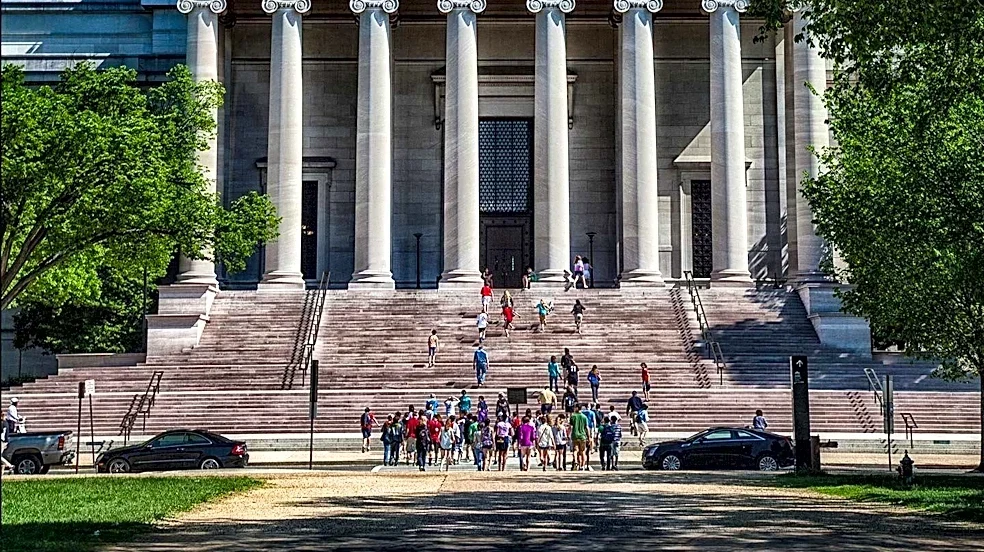
The National Gallery of Art in Washington D.C. provides free admission to its vast collections, making it one of the world's premier art museums. Located on the National Mall, the museum is divided into two main buildings: the West Building and the East
Building. The West Building is dedicated to European masterworks, while the East Building focuses on modern and contemporary art. The gallery boasts a significant collection of nearly 400 French impressionist and post-impressionist paintings, recognized as one of the finest of its kind globally. The museum operates from 10:00 a.m. to 5:00 p.m. daily. Its address is 6th St and Constitution Ave NW, Washington, DC 20565, placing it at a central and accessible location for visitors.
Why It's Important?
The National Gallery of Art's commitment to free admission is crucial for democratizing access to high-quality art and culture in the U.S. By removing financial barriers, the museum ensures that a diverse range of individuals, regardless of socioeconomic status, can engage with and benefit from its extensive collections. This accessibility fosters cultural literacy, critical thinking, and appreciation for artistic heritage among the public. The presence of such a significant institution in the nation's capital also enhances Washington D.C.'s status as a cultural hub, attracting both domestic and international tourists. This, in turn, can stimulate local tourism and hospitality sectors. Furthermore, its focus on European masterworks and modern art provides educational opportunities for students and researchers, contributing to academic discourse and artistic development within the country.
What's Next?
The National Gallery of Art is expected to continue its mission of providing free access to its collections, potentially exploring new exhibitions and educational programs to engage a broader audience. Future initiatives might include collaborations with other cultural institutions, digital outreach programs to extend its reach beyond physical visitors, and special events to highlight specific aspects of its diverse holdings. The museum may also continue to acquire new pieces to enrich its collections, particularly in the modern and contemporary art sectors, to reflect evolving artistic trends and historical narratives. Ongoing conservation efforts will also be a priority to preserve its valuable artworks for future generations. The consistent availability of free admission will likely remain a cornerstone of its public service.
Beyond the Headlines
The National Gallery of Art's model of free admission challenges the commercialization often seen in the art world, emphasizing public service and cultural enrichment over revenue generation. This approach underscores a broader philosophical commitment to the idea that art is a public good, essential for societal well-being and intellectual growth. The museum's dual focus on historical European art and contemporary works also highlights the continuous dialogue between past and present artistic movements, encouraging visitors to consider the evolution of art and its relevance to contemporary issues. Its location in Washington D.C. subtly positions art within the national consciousness, suggesting its importance alongside political and historical landmarks. This integration of art into the public sphere can inspire civic engagement and a deeper understanding of shared cultural heritage.