
What's Happening?
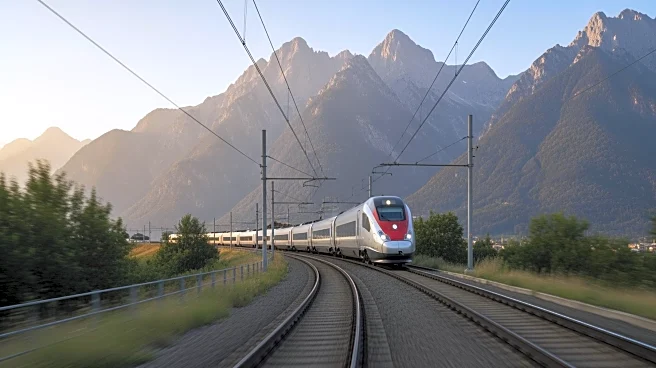
Rail Europe is experiencing a surge in demand for rail travel across northern Italy as preparations for the Milano-Cortina 2026 Winter Olympics intensify. Milan is emerging as a key international gateway,
with cities like Venice and Verona becoming significant rail destinations for Olympic-related itineraries. High-speed rail services are facilitating efficient travel between major cities, enhancing the connectivity of the region. The rail network is expected to be the backbone of regional mobility during the Games, with enhancements planned to accommodate the influx of spectators and workforce. This includes increased capacity and extended schedules to ensure seamless movement between Olympic venues spread across northern Italy.
Why It's Important?
The growing demand for rail travel in northern Italy highlights the critical role of rail infrastructure in supporting major international events like the Winter Olympics. The emphasis on rail as a primary mode of transportation underscores its efficiency and environmental benefits compared to road travel. This development is significant for the tourism and transportation sectors, potentially boosting economic activity in the region. The enhanced rail network not only supports the Olympics but also strengthens cross-border connections with neighboring countries, promoting regional integration and cooperation.
What's Next?
As the Milano-Cortina 2026 Winter Olympics approach, further enhancements to the rail network are anticipated. Organizers are likely to continue focusing on improving rail services to ensure they meet the demands of increased passenger traffic. The success of these efforts could set a precedent for future international events, encouraging other host cities to prioritize sustainable transportation solutions. Stakeholders, including local governments and transportation authorities, will need to collaborate closely to address any logistical challenges and ensure the smooth operation of the rail network during the Games.