
What's Happening?
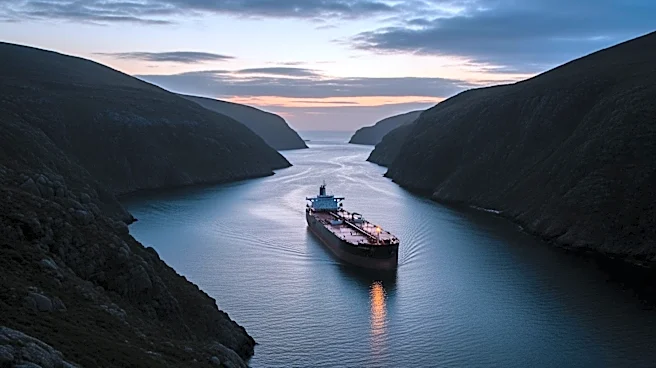
Iran has strategically leveraged the Strait of Hormuz as a critical point in its ongoing negotiations with the United States over its nuclear program. The strait, through which a significant portion of the world's
oil supply passes, has been a focal point of tension. Iran's parliament speaker, Mohammad Bagher Ghalibaf, indicated progress in talks with the U.S., but significant gaps remain. The negotiations, held in Islamabad, have not fully alleviated Iran's distrust of the U.S., although mutual understanding has reportedly improved. The situation remains tense as Iran insists on its nonnegotiable issues, and the potential for conflict looms with the ceasefire nearing expiration.
Why It's Important?
The Strait of Hormuz is a vital chokepoint for global oil transportation, and its closure or restricted access can have significant implications for global energy markets. Iran's ability to control this passage gives it substantial leverage in negotiations, potentially affecting global oil prices and economic stability. The ongoing standoff highlights the geopolitical tensions in the region and the challenges in reaching a diplomatic resolution. The outcome of these negotiations could impact U.S. foreign policy, regional security, and international relations, particularly with countries reliant on oil passing through the strait.
What's Next?
As the ceasefire expiration approaches, the potential for renewed hostilities increases. The U.S. and Iran may continue negotiations to prevent escalation, but the lack of trust and unresolved issues pose significant challenges. The international community, including mediators like Pakistan, may play a role in facilitating further dialogue. The U.S. has indicated a willingness to impose further economic pressure, which could influence Iran's negotiating position. The situation remains fluid, with potential for both diplomatic breakthroughs and military confrontations.