





What's Happening?
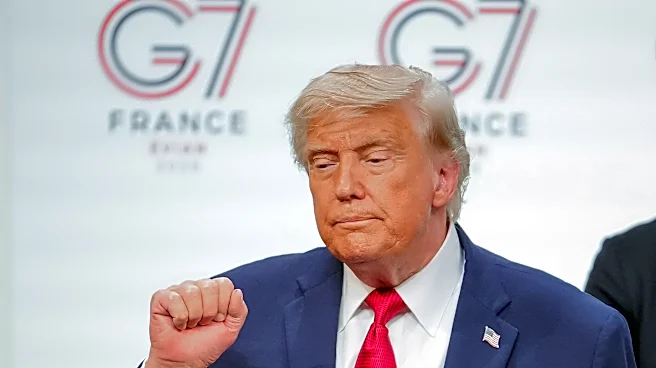
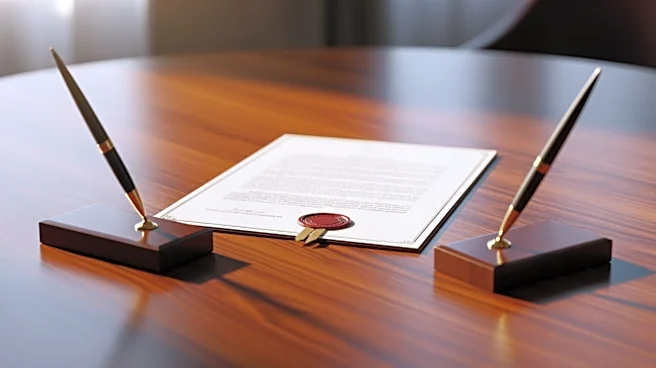
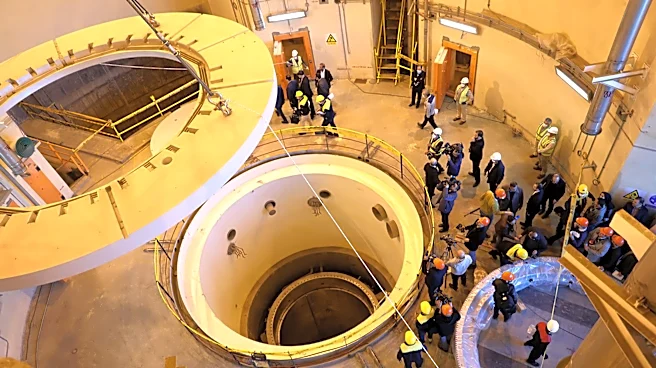
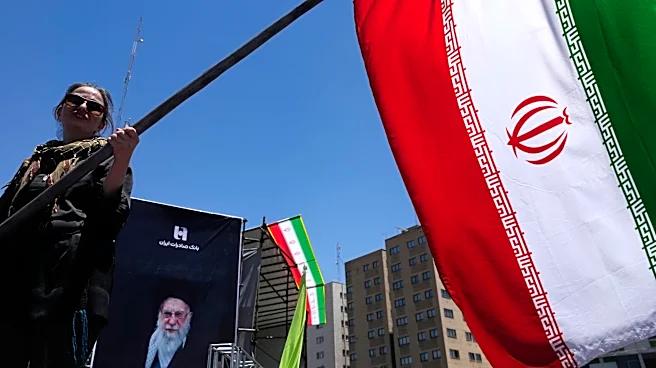
President Trump has signed a preliminary agreement with Iran, marking a departure from the 2015 Joint Comprehensive Plan of Action (JCPOA) established under President Obama. The new Memorandum of Understanding (MOU) includes a commitment from Iran to
halt nuclear weapon development in exchange for significant economic incentives, including $300 billion for reconstruction. Unlike the JCPOA, which focused on phased sanctions relief, Trump's deal offers immediate economic benefits and aims to reopen the Strait of Hormuz, a critical oil passage. The agreement also outlines the lifting of U.S. and U.N. sanctions, contingent on further negotiations.
Why It's Important?
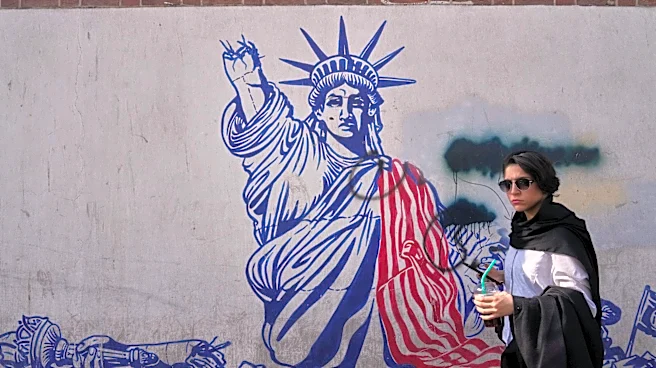
This development represents a strategic pivot in U.S. foreign policy, emphasizing economic engagement over military confrontation. The deal could potentially stabilize the Middle East by reducing tensions and fostering economic growth in Iran. However, it raises concerns about the adequacy of nuclear oversight, as the MOU lacks detailed provisions on uranium enrichment limits. The economic implications are significant, as the reopening of the Strait of Hormuz could alleviate global oil supply concerns. Politically, the deal may influence U.S. relations with allies and adversaries, particularly Israel, which has expressed reservations about the agreement's effectiveness.
What's Next?
The MOU initiates a 60-day period for negotiating a comprehensive agreement, during which key issues such as nuclear enrichment and missile programs will be addressed. The outcome of these talks will determine the future trajectory of U.S.-Iran relations and regional stability. The international community will closely watch the negotiations, as the deal's success could reshape geopolitical alliances and economic partnerships. Domestically, the agreement may impact President Trump's approval ratings and influence upcoming elections, as public opinion on foreign policy remains divided.