



What's Happening?
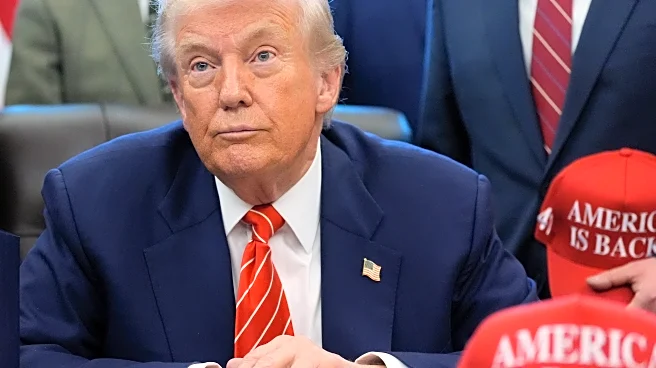
A new executive order signed by President Trump on January 20, 2025, has frozen all foreign aid pending a review, leading to significant disruptions in global humanitarian aid and development assistance programs. This includes the cancellation of a USAID
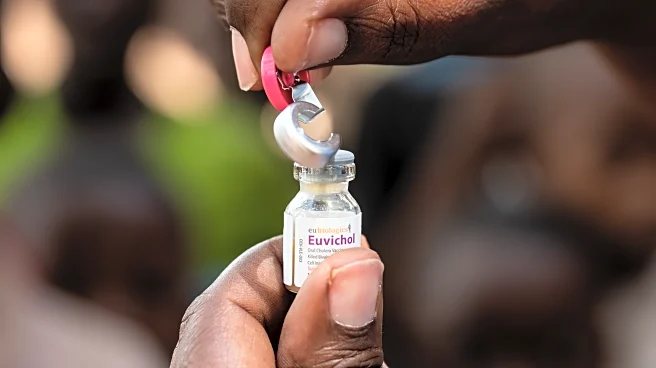
grant for an HIV vaccine trial, which was initially supported by a $45 million grant from the U.S. Agency for International Development. The project, aimed at developing an innovative vaccine to prevent HIV, was forced to seek alternative funding sources after the withdrawal of U.S. support. The South African Medical Research Council and the Gates Foundation eventually provided funding, although it was only a fraction of the original grant. The trial, which had been delayed for nearly a year, has now begun screening participants for a pared-down version of the study.
Why It's Important?
The freezing of foreign aid by the Trump administration has significant implications for global health initiatives, particularly those targeting diseases like HIV that disproportionately affect sub-Saharan Africa. The withdrawal of U.S. funding from the HIV vaccine trial underscores the vulnerability of international health projects to political decisions. The situation highlights the challenges faced by researchers in securing consistent funding for critical health initiatives. The reliance on alternative funding sources, such as the South African Medical Research Council and the Gates Foundation, demonstrates the resilience and determination of the scientific community to continue vital research despite financial setbacks. The broader impact of this funding freeze could hinder progress in combating global health crises and exacerbate existing health disparities.
What's Next?
The future of the HIV vaccine trial now depends on the success of the pared-down study funded by non-U.S. sources. Researchers are determined to continue their work, despite the reduced scope of the trial. The scientific community may need to explore additional funding avenues and collaborations to ensure the continuation of essential health research. The Trump administration's review of foreign aid could lead to further changes in funding priorities, potentially affecting other international health and development projects. Stakeholders, including global health organizations and governments, may need to advocate for the restoration of funding to support critical health initiatives worldwide.