




What's Happening?
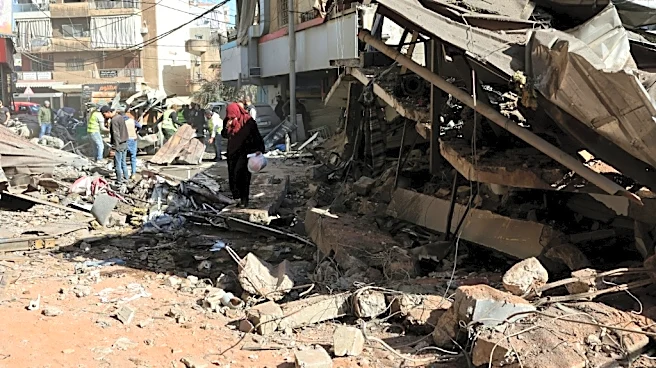
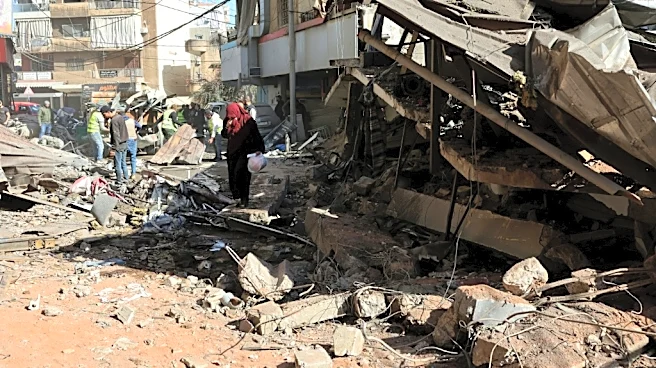
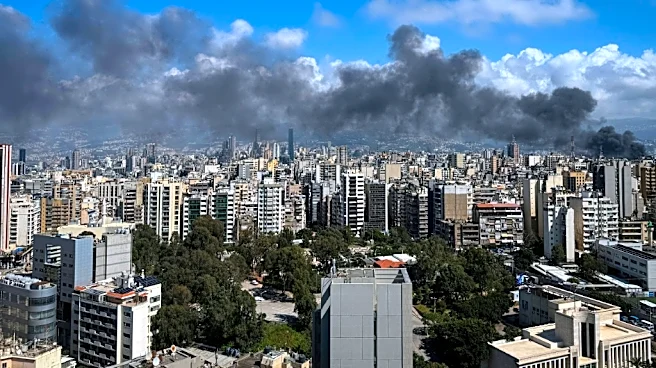
Israel conducted a significant military strike against Hezbollah targets in Lebanon, marking the largest such operation since the start of Operation Roaring Lion. The strike, which targeted Hezbollah headquarters and military infrastructure, occurred
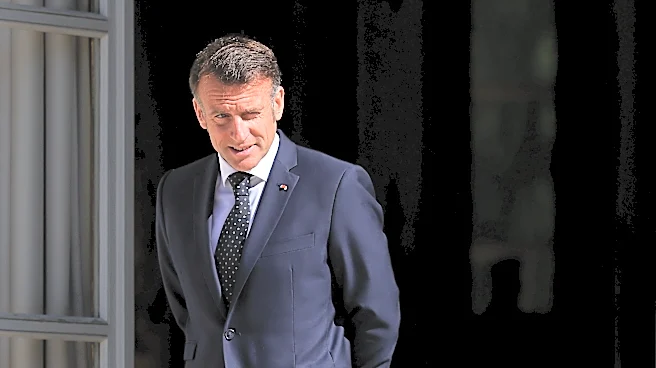
shortly after a ceasefire with Iran took effect. The international response has been critical, with French President Emmanuel Macron condemning the attacks and media outlets portraying Israel as an aggressive actor. The operation has sparked debate over Israel's military and diplomatic strategies, particularly in light of the sensitive timing and the global perception of the strikes.
Why It's Important?
The strikes have intensified scrutiny of Israel's military actions and its diplomatic approach to conflict resolution. The global criticism highlights the challenges Israel faces in balancing military objectives with international perception and diplomatic relations. The operation underscores the ongoing tension between Israel and Hezbollah, as well as the broader geopolitical dynamics involving Iran. The situation also raises questions about Israel's public diplomacy efforts and its ability to effectively communicate its security rationale to the international community.
What's Next?
Israel may need to address the diplomatic fallout from the strikes and engage in efforts to mitigate negative perceptions. This could involve increased public diplomacy to explain its security concerns and the rationale behind the operation. The international community will likely continue to monitor the situation, with potential implications for Israel's relationships with key allies and its standing in global forums. The incident may also influence future military and diplomatic strategies in the region.