






What's Happening?
The Department of Land and Natural Resources (DLNR) has received notification from the Department of the Navy and the National Aeronautics and Space Administration (NASA) regarding the withdrawal of their Final Environmental Impact Statement (FEIS) for
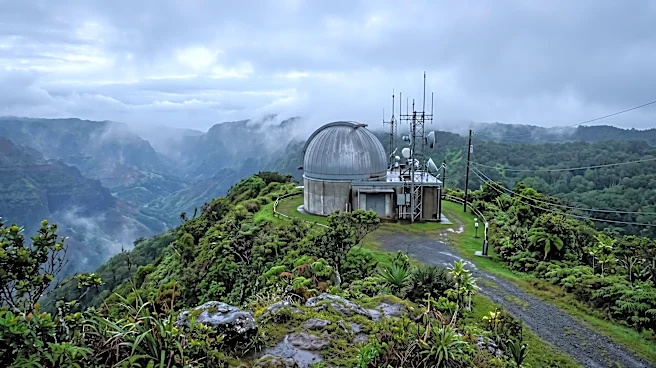
the Pacific Missile Range Facility (PMRF) and Kōkeʻe Park Geophysical Observatory (KPGO) on Kauaʻi. The FEIS was initially filed on August 14, 2026, with an original acceptance deadline of September 13, 2026. This deadline was extended to September 29, 2026, following a request from the Navy and NASA. Subsequently, the DLNR suspended the acceptance deadline on September 14, 2026, due to the impacts of Hurricane Lowell on Kauaʻi, aiming to ensure public participation in the review process. DLNR First Deputy Director Dave Day commended the decision, stating it is in the best interest of Hawaiʻi's people and demonstrates respect for Hawaiʻi law and responsiveness to public views.
Why It's Important?
The withdrawal of the FEIS is significant for several reasons. It prevents the document from being presented to the Board of Land and Natural Resources (BLNR) for a determination of its acceptability, effectively halting the immediate progression of the military facilities project as outlined in the withdrawn statement. This action underscores the importance of environmental impact statements in providing comprehensive information to decision-makers and the public, facilitating well-reasoned decisions regarding state land use in accordance with Hawaiʻi law. The DLNR's commendation highlights a federal agency's responsiveness to local concerns and legal frameworks, potentially setting a precedent for future federal projects in the state. The decision also reflects the impact of natural disasters, like Hurricane Lowell, on administrative processes and the public's ability to engage in critical reviews, emphasizing the need for flexibility in such situations.
What's Next?
As a direct consequence of the withdrawal, the FEIS will not be reviewed by the Board of Land and Natural Resources. If the Navy and NASA choose to submit another draft environmental impact statement in the future, it will be required to meet all initial filing, distribution, publication, review, and notification requirements, including a new public-comment period. This means any future proposal for the PMRF and KPGO will essentially restart the environmental review process, allowing for renewed public input and scrutiny. The emergency period related to Hurricane Lowell, which had suspended the acceptance deadline, is set to expire on December 20, 2026, but the withdrawal of the FEIS renders this deadline moot for the current project. Future actions will depend on whether the Navy and NASA decide to revise and resubmit their plans.
Beyond the Headlines
This event highlights the intricate balance between federal military and scientific interests and local environmental and community concerns, particularly in a state like Hawaiʻi with unique ecological and cultural sensitivities. The withdrawal suggests a potential shift towards greater federal agency accountability and engagement with local stakeholders and legal frameworks. It also underscores the power of public voice and the role of environmental review processes in shaping significant land use decisions. The incident could influence how similar federal projects are approached in other states, emphasizing the need for thorough environmental assessments and robust public participation from the outset. The DLNR's stance reinforces the principle that environmental impact statements are not merely procedural hurdles but essential tools for informed governance and community well-being.