



What's Happening?
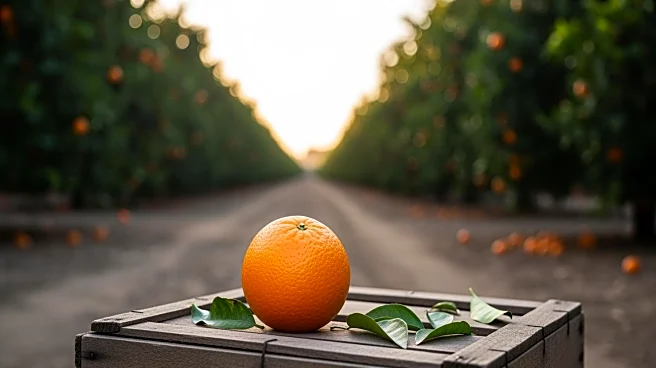
Florida's orange harvest is projected to reach its lowest level since 1930, with the state expected to produce only 12 million boxes of fruit in the 2025-26 season. This represents a 2% decrease from the previous year, according to the U.S. Department
of Agriculture's first forecast for the season. The decline is attributed to the ongoing removal of historical orange groves due to citrus greening disease and the aftermath of Hurricane Milton in late 2024. Despite new treatments that have improved the potential of some infected trees, the overall loss of acreage continues to impact production. The state has allocated nearly $140 million in its 2025-26 budget to support the citrus industry, with plans to plant between two to five million new trees. However, these trees will take three to five years to begin producing fruit.
Why It's Important?
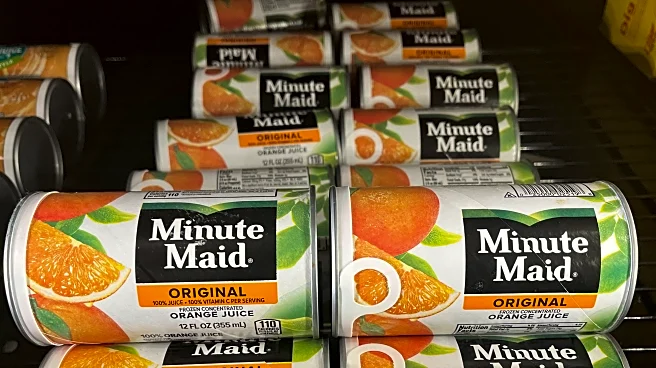
The significant drop in Florida's orange production has implications for both the local economy and the broader U.S. citrus market. Florida's oranges are primarily used for juicing, and the reduced harvest could affect the supply and pricing of orange juice. However, the impact on consumers may be mitigated by Brazil's anticipated rebound in orange production, which has already led to a decrease in orange juice futures prices. Additionally, the U.S. has lowered the minimum sugar content requirement for pasteurized orange juice, potentially increasing the volume of Florida's oranges used in juice production. The situation underscores the challenges faced by the citrus industry, including disease management and climate-related disruptions.
What's Next?
The future of Florida's orange production will depend on the success of new tree plantings and ongoing disease management efforts. The state's investment in the citrus industry aims to support recovery, but it will take several years for new trees to contribute to production levels. In the meantime, the industry will need to navigate market fluctuations and consumer demand. The potential for increased use of Florida oranges in juice production, due to regulatory changes, could provide some relief. Stakeholders will be closely monitoring the situation to assess the long-term viability of Florida's citrus industry.