
What's Happening?
Bollinger Shipyards has been awarded a contract by the U.S. Coast Guard to construct four Arctic Security Cutters (ASCs). This initiative is a significant advancement in enhancing the United States' operational
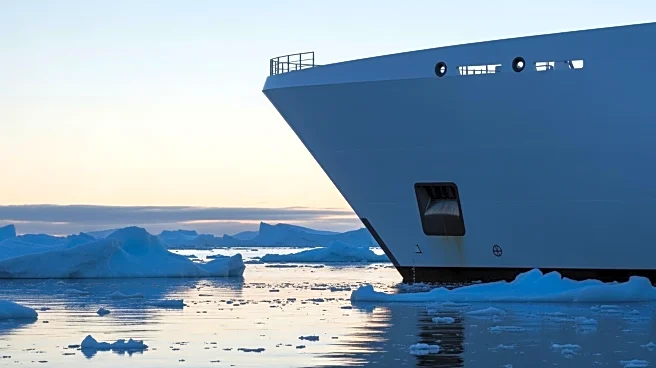
capabilities in polar regions. The construction of these medium polar icebreakers will take place at Bollinger's shipyard in Houma, Louisiana, with additional support from various Gulf Coast facilities. The design of the ASC class is based on the Multi-Purpose Icebreaker model developed by Seaspan Shipyards of Canada and Aker Arctic Technology of Finland. These cutters are intended for high-endurance missions in the Arctic, including icebreaking, sovereignty enforcement, maritime security, and year-round operations in challenging conditions. Bollinger CEO Ben Bordelon emphasized the importance of this program in the modernization of the Coast Guard fleet, highlighting the company's commitment to delivering the vessels on schedule and ready for mission deployment.
Why It's Important?
The contract for the Arctic Security Cutters represents a strategic enhancement of the U.S. Coast Guard's capabilities in the Arctic, a region of increasing geopolitical and environmental significance. As climate change opens new maritime routes and resources in the Arctic, the ability to operate effectively in these areas becomes crucial for national security and economic interests. The collaboration with Canada and Finland underscores the international dimension of Arctic operations and the need for robust icebreaking capabilities. This development is likely to bolster the U.S. presence in the Arctic, ensuring that the country can protect its interests and respond to emerging challenges in the region. The program also supports domestic shipbuilding and related industries, contributing to economic activity and job creation along the Gulf Coast.
What's Next?
The Arctic Security Cutter program is part of a broader effort to expand the U.S. Arctic fleet, with plans to eventually field up to 11 vessels. This expansion will complement the ongoing Polar Security Cutter initiative, creating a comprehensive and layered approach to Arctic operations. As the construction of these vessels progresses, there will likely be increased collaboration with international partners to address shared challenges in the Arctic. The U.S. Coast Guard will continue to refine its strategies for Arctic engagement, potentially influencing future policy decisions and resource allocations. Stakeholders, including environmental groups and indigenous communities, may also engage in discussions about the implications of increased Arctic activity.