



What's Happening?
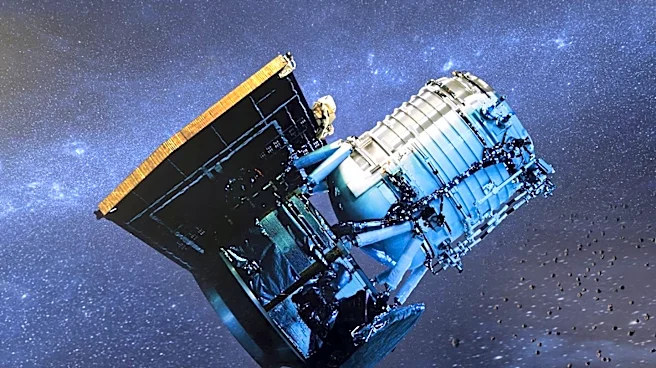
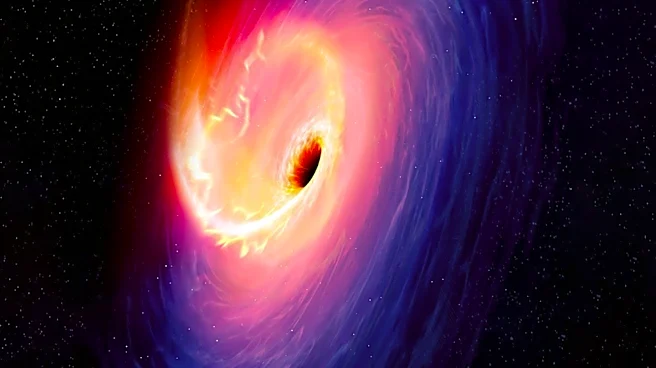
NASA's Neil Gehrels Swift Observatory has observed a rare astronomical event where a 'wandering' mega black hole shredded a star. This phenomenon, known as a tidal disruption event, was detected on the outskirts of a galaxy approximately 750 million light-years
away. The black hole, weighing about a million times the Sun's mass, was first identified in November 2025 by the Zwicky Transient Facility. The event was notable for its location far from the galaxy's core, challenging previous assumptions about where such events occur.
Why It's Important?
This discovery is significant as it provides new insights into the behavior of supermassive black holes and their interactions with stars. The ability to detect such events outside of galaxy cores suggests that there may be more 'wandering' black holes than previously thought. This could have implications for our understanding of galaxy formation and the distribution of black holes in the universe. The findings also demonstrate the effectiveness of new observational techniques and artificial intelligence in identifying rare cosmic events.
What's Next?
Following this discovery, scientists plan to use the new technique to search for more tidal disruption events. Upcoming observations from the Vera C. Rubin Observatory and NASA's Nancy Grace Roman Space Telescope will expand the search for these events, potentially revealing more about the prevalence and behavior of wandering black holes. The Swift Observatory, once it resumes normal operations, will continue to play a crucial role in these efforts, contributing to a more comprehensive understanding of the universe's black holes.