

What's Happening?
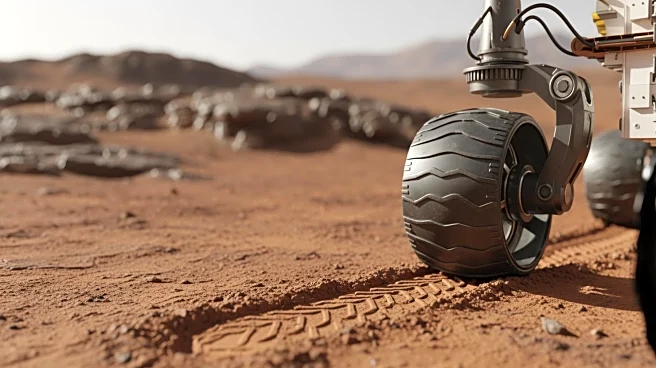
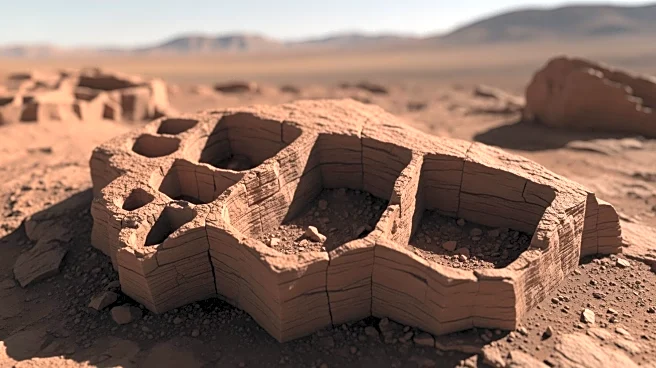
NASA's Curiosity rover has been exploring Martian boxwork formations, revealing evidence of ancient groundwater flow. These formations, resembling giant spiderwebs, consist of low ridges with sandy hollows, suggesting that water once flowed through large
fractures in the bedrock. The rover's close-up study indicates that groundwater activity on Mars may have persisted longer than previously thought, raising questions about the planet's habitability. The findings suggest that water needed for sustaining life could have lasted longer, providing new insights into Mars' ancient climate and the potential for past microbial life.
Why It's Important?
The discovery of boxwork formations on Mars has significant implications for understanding the planet's history and its potential to support life. The evidence of prolonged groundwater activity suggests that Mars may have been habitable for longer periods, offering new avenues for research into the planet's climate and geological history. This information is crucial for future Mars exploration missions, as it helps identify areas of interest for studying the planet's past environments. The findings also contribute to the broader understanding of planetary habitability and the conditions necessary for life beyond Earth.
What's Next?
Curiosity will continue to explore the sulfate layer on Mount Sharp, where the boxwork formations are located, to gather more data on Mars' ancient climate. The rover's findings will guide future missions in selecting landing sites and research targets, focusing on areas with evidence of past water activity. Scientists will analyze the collected samples to understand the mineral composition and the processes that led to the formation of these structures. The ongoing research aims to uncover more about Mars' potential to support life and the planet's geological evolution.