






What's Happening?
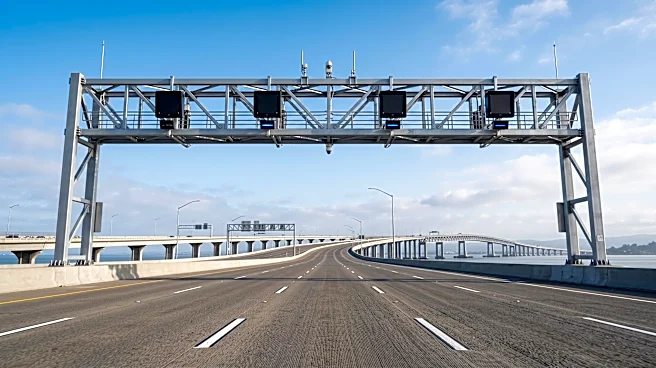
Caltrans has successfully completed the full closure of Interstate 580 (I-580) for toll gantry installation as part of the Open Road Tolling Project in Richmond, California. All lanes on the westbound I-580 at the Richmond-San Rafael Bridge Toll Plaza
were reopened at 7:30 a.m. on Sunday, November 15, 2026, 30 minutes ahead of schedule. This operation involved electrical work for the new tolling system, maintenance by four crews for painting, electrical, bridge deck rehabilitation, and barrier fixes, as well as SM&I investigations on the westbound Richmond Bridge. The Open Road Tolling (ORT) Program aims to replace the existing aging toll system with new gantry technology designed to process all tolls electronically, eliminating the need for drivers to stop at toll booths. This initiative is part of a broader effort to modernize toll collection and improve traffic flow.
Why It's Important?
The completion of the toll gantry installation marks a significant step towards enhancing traffic flow and safety on a critical transportation artery in California. By removing traditional toll booths, the ORT Program is expected to alleviate stop-and-go conditions, thereby reducing congestion and improving overall highway operations. This modernization effort also carries environmental benefits, as reduced vehicle idling at toll plazas will lead to lower greenhouse gas emissions. Furthermore, the improved efficiency and safety are anticipated to encourage carpooling and the use of public transit, aligning with broader goals of sustainable transportation. The project's success will directly impact commuters and commercial traffic utilizing the Richmond-San Rafael Bridge, potentially saving time and fuel while contributing to a cleaner environment.
What's Next?
Following the installation, Caltrans is scheduled to reconfigure the toll booths from left to right. The complete removal of the physical toll booths is planned for the winter/spring of 2027. Additionally, the Stenmark Drive on-ramp to Westbound I-580 will remain closed tentatively until Spring 2027 as part of the ongoing project. The ORT Program's full implementation will transition the toll collection to an entirely electronic system, optimizing the processing of tolls. Drivers can stay updated on traffic conditions and project developments through 511.org on Twitter and Caltrans QuickMap. The long-term goal is to fully integrate the new electronic tolling system, providing a seamless experience for drivers and further improving the efficiency of the I-580 corridor.
Beyond the Headlines
The shift to open road tolling represents a broader trend in infrastructure modernization across the U.S., moving away from physical toll booths towards more efficient electronic systems. This technological upgrade not only addresses immediate traffic and environmental concerns but also sets a precedent for future infrastructure projects. The ethical implications include ensuring equitable access and payment options for all drivers, regardless of their technological access or financial situation. Culturally, it signifies a move towards a more automated and less human-intervened transportation system. The long-term economic impact could include increased regional connectivity and reduced operational costs for toll authorities, potentially leading to more efficient allocation of resources for road maintenance and development. This development reflects a commitment to leveraging technology for urban planning and environmental sustainability.