





What's Happening?
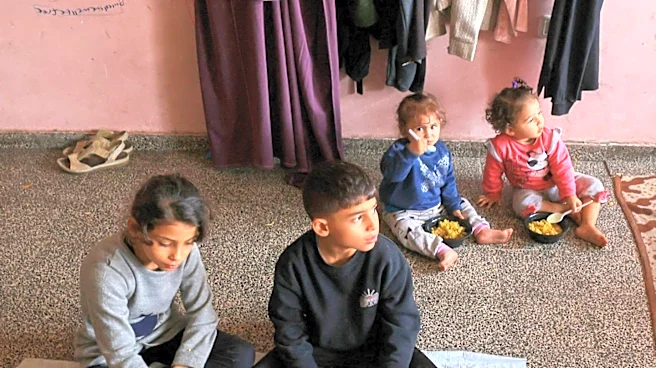
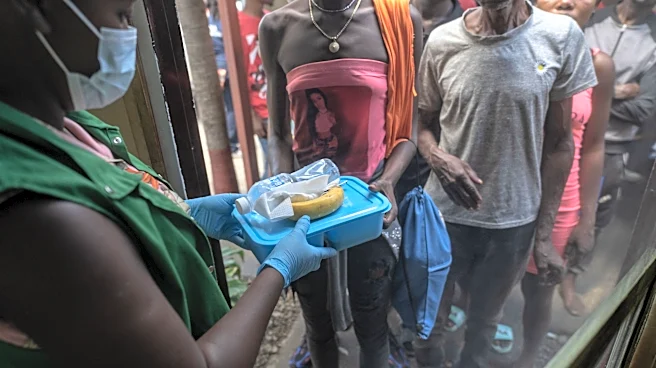
A recent report from Action Against Hunger, highlighted at an Overseas Development Institute (ODI) event, reveals a significant escalation in global hunger. An estimated 266 million people across 47 countries and territories faced acute food insecurity
in 2025, a figure that has doubled since 2016. The UK's Minister of State for International Development, Kirsty McNeill, expressed outrage at the situation, noting that 645 million people went hungry last year and a third of humanity could not afford a healthy diet. Famine was confirmed in two locations in the same year, despite the world producing enough food for everyone. McNeill emphasized that hunger is not a supply problem but rather an issue of access, inequality, and political choices. Humanitarian funding for food security has drastically fallen by more than half over the past three years, exacerbating the crisis. Ten countries account for 170 million of those facing acute food insecurity, with Nigeria, the Democratic Republic of Congo, and Sudan alone comprising 82.9 million.
Why It's Important?
The escalating global hunger crisis has profound implications beyond immediate suffering. It highlights systemic failures in food distribution, market mechanisms, and international aid. The significant reduction in humanitarian funding for food security, a 59% drop between 2022-2025, indicates a critical gap in global response efforts. This decline in aid, coupled with increasing numbers of acutely food-insecure individuals, suggests a growing instability in vulnerable regions. The concentration of hunger in just ten countries underscores the need for targeted interventions and robust political will to address root causes like conflict, displacement, and economic disparities. The crisis also poses long-term development challenges, as malnutrition in children, affecting nearly 30 million under-fives in 2025, can lead to lasting health and cognitive impairments, hindering future societal progress and economic stability.
What's Next?
Addressing the escalating global hunger crisis will require immediate and coordinated international action. Advocacy groups like Action Against Hunger are calling for increased donor commitment to fund humanitarian response plans, which are currently underfunded in many critical areas. The UK Minister of State for International Development, Kirsty McNeill, has indicated that food security will be a key focus of her work, emphasizing the interconnectedness of food, health, climate, human, and economic securities. Future efforts will likely involve pushing for political solutions to conflicts that disrupt food systems, improving market access for vulnerable populations, and investing in climate-resilient agriculture, as demonstrated by Bangladesh's progress. There will also be a continued push for more efficient data collection and early warning systems to prevent crises from escalating, requiring sustained funding for monitoring programs that are currently losing support.
Beyond the Headlines
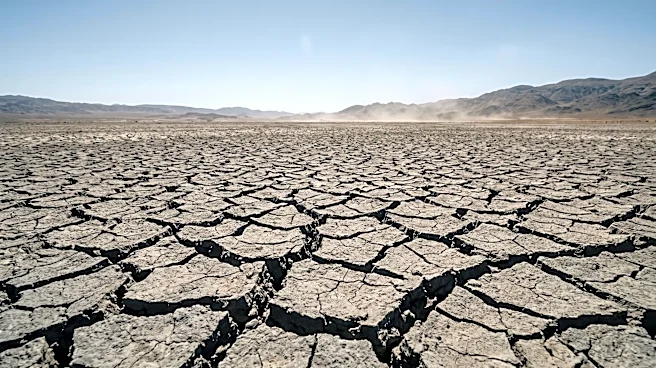
The current global hunger crisis extends beyond mere food shortages, revealing deeper ethical and political dimensions. The assertion that 'people make famine' in the 21st century points to a moral failing in global governance and economic systems. It highlights how political choices, market failures, and conflicts actively create and perpetuate food insecurity, rather than it being solely a consequence of natural disasters. The disproportionate impact on specific regions and the concentration of hunger in a few countries underscore issues of global inequality and power dynamics. Furthermore, the drastic reduction in humanitarian aid raises questions about international solidarity and the commitment of wealthier nations to global humanitarian responsibilities. This crisis also exposes the fragility of global food systems, where disruptions in one region, such as shipping lanes, can have ripple effects on food availability and prices worldwide, affecting both developing and developed nations.