







What's Happening?
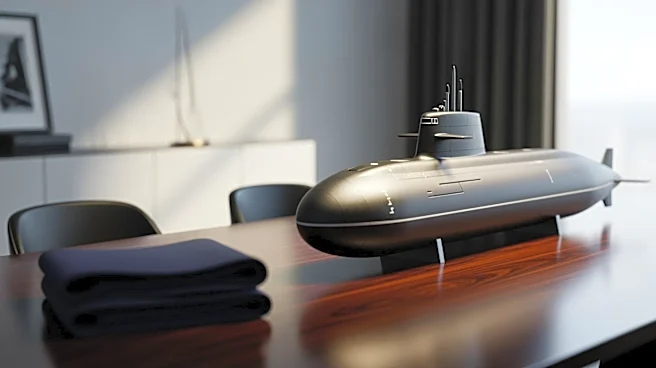
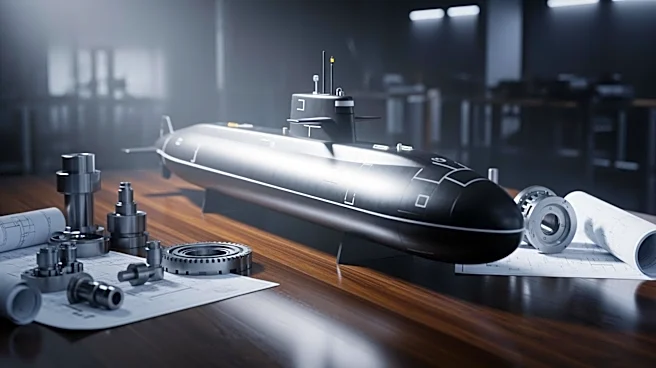
Germany has entered into a significant $8 billion agreement with India to collaborate on the construction of advanced conventional submarines. This partnership, involving Germany's ThyssenKrupp Marine Systems and India's Mazagon Dock Shipbuilders, is part of India's Project-75(I)
initiative. The deal emphasizes technology transfer, allowing India to access German expertise in submarine design, propulsion systems, and stealth technologies. This collaboration supports India's 'Make in India' initiative by focusing on local manufacturing and reducing dependency on foreign suppliers.
Why It's Important?
The agreement marks a strategic shift in India's defense procurement strategy, moving towards self-reliance and capability building. By acquiring advanced technologies, India aims to strengthen its naval capabilities, particularly in response to regional maritime challenges. The deal also enhances India's industrial base, creating high-skilled jobs and boosting local manufacturing. For Germany, this partnership reinforces its role as a key player in global defense technology transfer, while diversifying India's defense relationships and reducing reliance on traditional partners.
What's Next?
The collaboration is expected to lead to the construction of next-generation diesel-electric submarines equipped with Air-Independent Propulsion systems, enhancing India's naval stealth and operational capabilities. The focus on technology transfer will enable Indian engineers to develop expertise in submarine construction, paving the way for future indigenous defense projects. This partnership may also influence India's defense policy, encouraging further collaborations with European nations to diversify its defense portfolio.