





What's Happening?
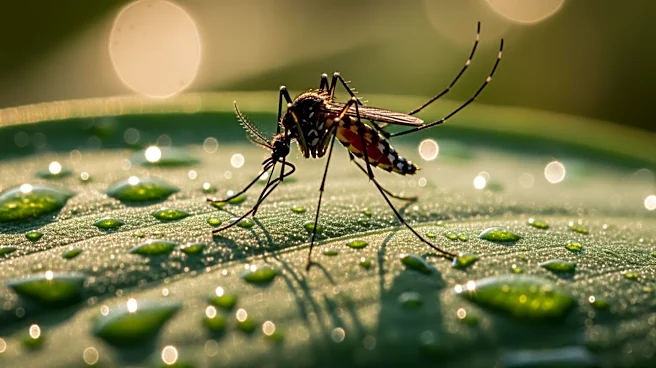
Dan Markowski, a technical advisor for the American Mosquito Control Association, has highlighted the potential for an early and aggressive mosquito season across various regions in the United States. This prediction is based on erratic winter weather,
surging spring temperatures, and higher-than-average precipitation, which create ideal breeding conditions for mosquitoes. The Midwest, West, and South-Central U.S. are expected to be particularly affected, with significant mosquito activity anticipated in May and June. Markowski advises that removing stagnant water from properties is crucial for managing mosquito populations, as these insects breed close to where they bite. He also warns against using mosquito traps and bug zappers, which are ineffective and can harm beneficial insects.
Why It's Important?
The anticipated increase in mosquito populations poses a public health concern, as mosquitoes are vectors for diseases such as West Nile virus and Zika virus. The early and aggressive season could lead to higher incidences of these diseases, impacting public health systems and increasing healthcare costs. Additionally, the presence of mosquitoes can affect outdoor activities and tourism, particularly in regions heavily reliant on these sectors. Effective mosquito control measures are essential to mitigate these impacts and protect public health and economic interests.
What's Next?
As the mosquito season progresses, public health officials and local governments may need to implement additional mosquito control measures, such as community-wide spraying and public awareness campaigns. Residents are encouraged to take preventive actions, such as eliminating standing water and using insect repellents. Monitoring and research will continue to assess the effectiveness of control measures and adapt strategies as needed. The situation will require ongoing attention to prevent potential outbreaks of mosquito-borne diseases.