






What's Happening?
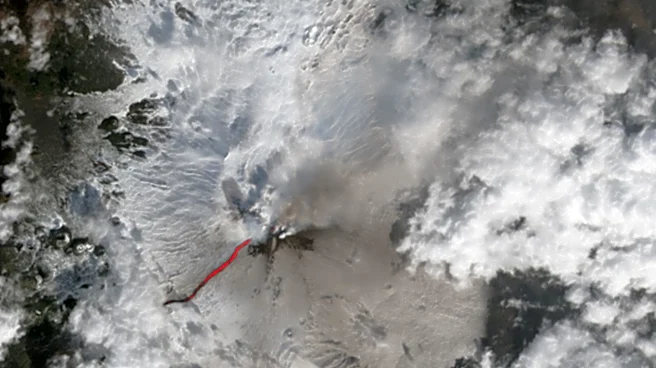
Flights at Italy’s Catania Airport were suspended on Sunday due to an ash emission from Mount Etna, Europe’s highest and most active volcano. The operator of the Sicilian airport, SAC, announced the suspension, advising passengers to check their flight
status with airlines before traveling. This disruption is not uncommon, as eruptions from Mount Etna frequently cause operational issues at Catania Airport. This summer, in particular, ash emissions have been notably intense, impacting the travel plans of thousands during the peak holiday season. The airport, which ranks as the fifth busiest in Italy, had all flights suspended until 21:59 GMT on Sunday, with further updates expected from the operator.
Why It's Important?
While this event directly impacts air travel in Italy, it highlights the broader vulnerability of critical infrastructure, such as airports, to natural phenomena. For U.S. travelers planning international trips, particularly to European destinations, such volcanic activity can lead to significant delays, cancellations, and re-routing, causing financial losses and logistical challenges. Airlines, including those with U.S. connections, face operational disruptions, increased costs for re-accommodating passengers, and potential revenue losses. The incident underscores the need for robust contingency planning in the aviation industry to mitigate the effects of unpredictable natural disasters, which can have ripple effects across global travel networks and supply chains, even if not directly affecting U.S. soil.
What's Next?
Catania Airport’s operator, SAC, is expected to provide further information regarding the resumption of flights. Passengers are advised to continue monitoring their flight status directly with their airlines. The frequency and intensity of Mount Etna’s eruptions suggest that similar disruptions could occur in the future, particularly during periods of heightened volcanic activity. Airlines and airport authorities will likely continue to implement protocols for managing ash-related flight suspensions, which may include temporary closures, flight diversions, and revised schedules. The long-term impact will depend on the volcano's ongoing activity and the effectiveness of mitigation strategies employed by aviation stakeholders.
Beyond the Headlines
The recurring disruptions caused by Mount Etna’s ash emissions underscore the complex interplay between natural geological processes and modern human infrastructure. Beyond the immediate travel inconveniences, these events raise questions about the long-term sustainability of operating a major international airport in close proximity to an active volcano. It highlights the constant challenge of balancing economic activity and public safety in geologically dynamic regions. Furthermore, the incident serves as a reminder of the broader environmental impacts of volcanic eruptions, including air quality concerns and potential effects on local ecosystems, which can have wider implications for public health and regional economies.