
What's Happening?
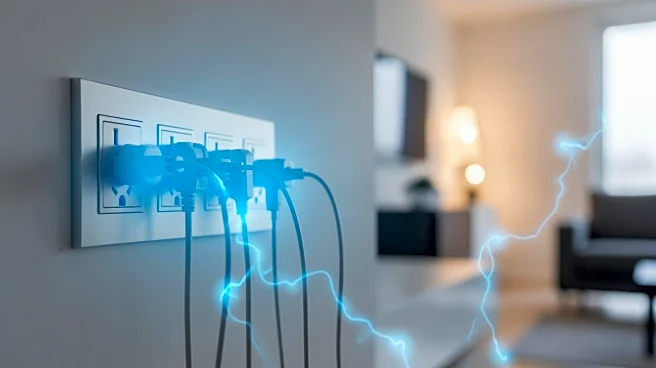
A recent report emphasizes the impact of 'phantom load' on household energy bills, particularly during the holiday season when energy consumption typically increases. Phantom load refers to the energy consumed
by appliances and devices that remain plugged in even when turned off. According to Energy.gov, this standby power can account for 5% to 10% of residential energy use. Common culprits include desktop computers in sleep mode, chargers, media players, and smart home appliances with always-on displays. The Natural Resources Defense Council estimates that reducing this load could save consumers $8 billion annually and prevent 44 million metric tons of carbon dioxide emissions. The report suggests using smart plugs, surge protectors, and energy-efficient appliances to mitigate these costs.
Why It's Important?
The issue of phantom load is significant as it contributes to unnecessarily high energy bills, which is a growing concern for many households. With 80% of adults reportedly stressed about utility costs, addressing phantom load offers a practical solution to reduce expenses. Moreover, the environmental benefits of reducing standby power are substantial, potentially lowering carbon emissions significantly. This aligns with broader efforts to promote energy efficiency and sustainability. By adopting simple measures like unplugging devices or using smart technology, consumers can achieve meaningful savings and contribute to environmental conservation.
What's Next?
Consumers are encouraged to adopt strategies to minimize phantom load, such as using smart plugs and energy-efficient appliances. The Energy Department and environmental groups may continue to raise awareness about energy-saving practices. As technology advances, more energy-efficient products are likely to enter the market, providing consumers with additional options to reduce energy consumption. Policymakers might also consider incentives for adopting energy-efficient technologies, further promoting sustainable practices.