




What's Happening?
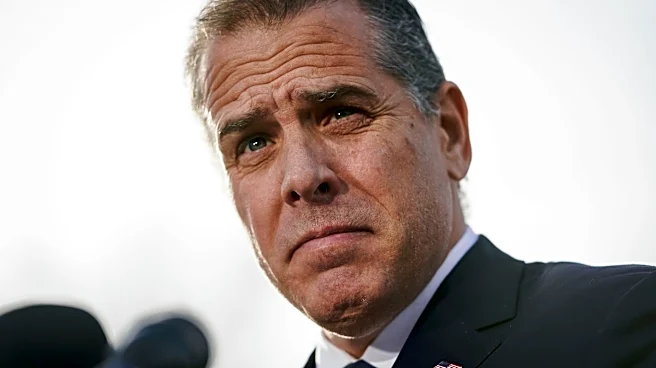
Hunter Biden, son of President Joe Biden, has taken to social media to address and reclaim his narrative amidst past scandals. Through a series of posts on X (formerly Twitter), Biden humorously addresses his history of drug addiction and legal issues,
including a preemptive presidential pardon. His posts, which have gained significant attention, also touch on cultural debates, such as the use of artificial intelligence. This social media activity coincides with the release of a memoir by his stepmother, Jill Biden, and comes at a time when President Trump faces high disapproval ratings. Hunter Biden's posts have sparked discussions about his role as a public figure and advocate for sobriety and the arts.
Why It's Important?
Hunter Biden's use of social media to address his past and engage with cultural debates highlights the evolving role of public figures in shaping their narratives. By directly addressing controversies and using humor, Biden is attempting to shift public perception and control the narrative surrounding his personal and family history. This approach reflects broader trends in how individuals use social media to influence public opinion and engage with audiences. It also underscores the challenges faced by public figures in managing their reputations in the digital age, where information spreads rapidly and narratives can be difficult to control.
What's Next?
Hunter Biden's continued engagement on social media may influence public perceptions of him and his family, potentially impacting their political and social standing. His posts could lead to further discussions about the role of public figures in addressing personal controversies and the effectiveness of social media as a tool for narrative control. As Biden continues to engage with cultural and political topics, his actions may prompt responses from political commentators, media outlets, and the public, potentially shaping future discourse around his family's legacy.
Beyond the Headlines
Biden's social media activity raises questions about the intersection of personal and public life for individuals in the political sphere. It highlights the complexities of managing personal narratives in a highly publicized environment and the potential for social media to serve as both a platform for personal expression and a tool for public relations. This case also reflects broader societal trends in how individuals navigate personal challenges and public scrutiny, offering insights into the changing dynamics of public life in the digital age.