









What's Happening?
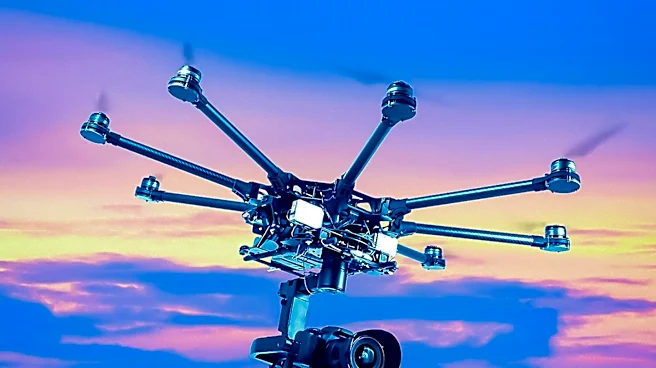
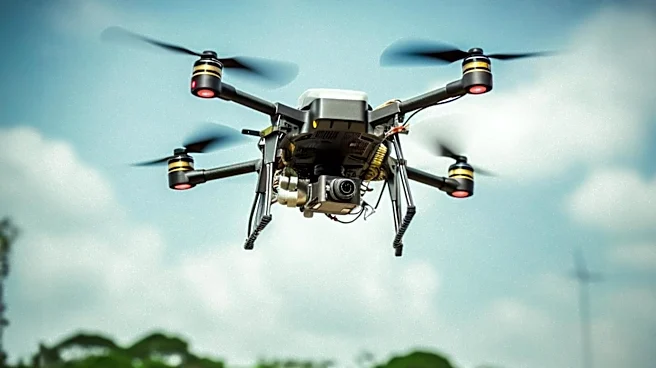
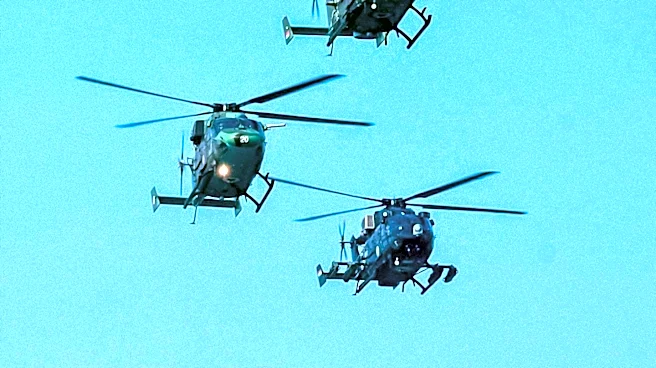
The U.S. Marine Corps is experimenting with the deployment of drones from helicopters to improve maritime operations. In a recent exercise off the coast of California, Marines launched small first-person-view drones from UH-1Y Venom and AH-1Z Viper helicopters.
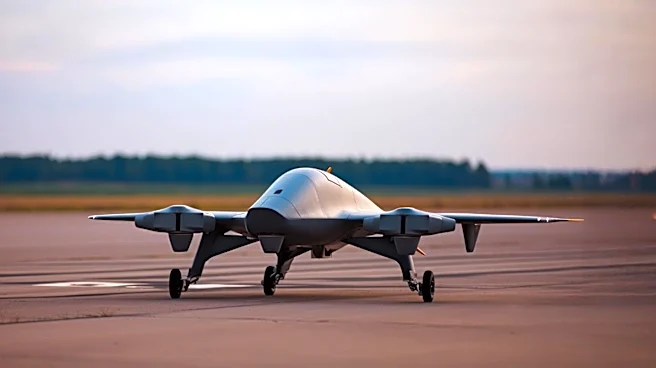
This initiative aims to use drones as a scouting tool to gather intelligence on ships before boarding, thereby reducing risks associated with such operations. The drones, known as Neros Archer, are relatively inexpensive, costing a few thousand dollars each. The exercise also explored the concept of helicopters serving as airborne motherships for smaller drones, a tactic already in use in conflict zones like Ukraine. This approach allows drones to extend their operational range without exposing operators to danger.
Why It's Important?
This development is significant for the U.S. military as it seeks to enhance its maritime operational capabilities. By integrating drones with helicopter operations, the military can conduct more effective reconnaissance and surveillance, reducing the risks associated with boarding and seizing ships. This capability is crucial for maintaining maritime security and could lead to more controlled and safer military operations. The use of drones as an extension of helicopter sensors represents a strategic advancement in military technology, potentially influencing future military tactics and procurement strategies.
What's Next?
The Marine Corps is likely to continue testing and refining this drone deployment strategy, potentially leading to broader adoption across other military branches. The success of these exercises could prompt increased investment in drone technology and further integration into military operations. Additionally, the military may explore similar tactics in other operational contexts, expanding the role of drones in modern warfare.