






What's Happening?
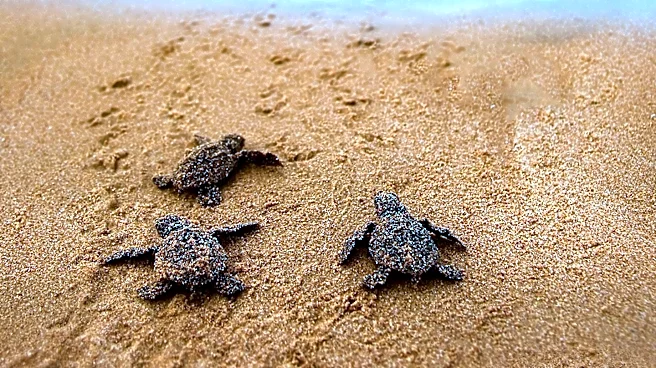
Coyotes have been observed digging up sea turtle nests on Anna Maria Island, Florida, as the region transitions into its sea turtle hatching season. This activity poses a significant threat to the reproductive success of sea turtles, which are often endangered
or threatened species. The coyotes' actions directly impact the survival rate of sea turtle eggs and hatchlings, potentially reducing the number of new turtles entering the marine ecosystem. This issue highlights a conflict between wildlife populations and conservation efforts, particularly in coastal areas where human development and natural habitats intersect. Local authorities and conservation groups are likely monitoring the situation to assess the extent of the damage and determine appropriate interventions to protect the vulnerable sea turtle nests.
Why It's Important?
The disruption of sea turtle nests by coyotes on Anna Maria Island is important due to its implications for biodiversity and conservation. Sea turtles play a crucial role in marine ecosystems, contributing to the health of coral reefs and seagrass beds. A decline in their population due to predation can have cascading effects on the broader marine environment. For Florida, which is a critical nesting ground for several sea turtle species, this issue underscores the ongoing challenges in protecting these animals. It also highlights the delicate balance between predator and prey in coastal ecosystems and the impact of human presence on these interactions. Conservation efforts often involve managing such conflicts to ensure the survival of protected species, making this a significant concern for environmental agencies and local communities.
What's Next?
In response to the coyote activity, it is anticipated that local wildlife management and conservation organizations will implement measures to protect the sea turtle nests. This could include increased monitoring of nesting sites, the installation of protective barriers around nests, or the relocation of vulnerable nests to safer areas. Public awareness campaigns may also be launched to educate residents and visitors about the importance of protecting sea turtle nests and to report any observed coyote activity near nesting areas. Long-term strategies might involve studying coyote behavior on the island to develop more sustainable solutions for coexistence and to mitigate future predation. The success of these interventions will be crucial for the continued recovery and protection of sea turtle populations in the region.
Beyond the Headlines
Beyond the immediate threat to sea turtle nests, this situation on Anna Maria Island reflects broader ecological challenges in coastal environments. The presence of coyotes in such close proximity to sea turtle nesting sites can be indicative of habitat changes, increased human-wildlife interaction, or shifts in local predator populations. This incident prompts a deeper examination of how human development and land use impact natural ecosystems and the species within them. It also raises questions about the effectiveness of current conservation strategies in adapting to dynamic environmental conditions and unexpected ecological pressures. Addressing this issue may require a holistic approach that considers not only the immediate protection of sea turtles but also the wider ecological health and balance of the island's ecosystem.