



What's Happening?
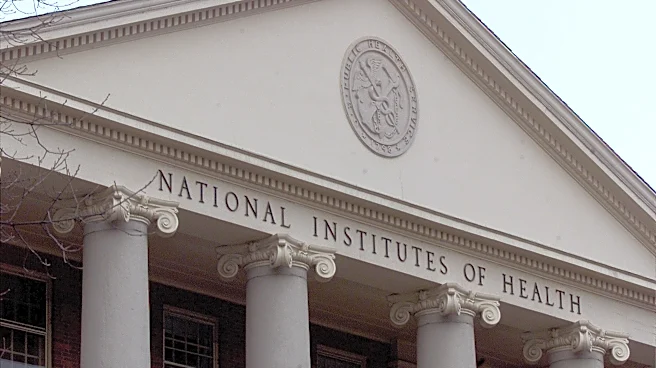
Assistant Professor Abigail Lind of Georgia Tech's School of Biological Sciences has received a Maximizing Investigators' Research Award (MIRA) from the National Institutes of Health (NIH) to study Blastocystis, a common but understudied protist in the human
gut. While much microbiome research has focused on bacteria, Lind's work aims to understand protists, which were previously considered pathogens but are now linked to positive health markers like reduced inflammation and improved cardiovascular outcomes. The MIRA program provides five years of flexible funding, enabling Lind to pursue ambitious research into these challenging organisms. Her team has developed new techniques to cultivate Blastocystis, which are notoriously difficult to work with due to their sensitivity to oxygen and unknown dietary needs, paving the way for deeper understanding of their role in the human gut.
Why It's Important?
This NIH funding is crucial for expanding our understanding of the human gut microbiome beyond bacteria, potentially uncovering new insights into human health and disease. Protists like Blastocystis, despite their prevalence, have been largely overlooked, meaning a significant component of our internal ecosystem remains a mystery. By investigating their interactions with microbial partners and human hosts, Lind's research could lead to novel therapeutic targets or diagnostic tools for various health conditions. The development of new cultivation techniques for these 'tricky' organisms is a significant scientific breakthrough, as it removes a major barrier to research. This work could establish a foundation for studying many other protists, ultimately providing a more complete picture of the complex and diverse human gut microbiome and its impact on overall well-being.
What's Next?
Lind's research team plans to continue developing genetic tools for studying Blastocystis, which will help identify the genes responsible for specific functions and map out how the protist operates. The goal is to make Blastocystis a more accessible system for researchers, allowing for broader investigation into its mechanisms and impact. This foundational work could lead to a better understanding of how protists influence the microbial community and human health. Future research may explore the potential for manipulating these organisms to improve health outcomes or prevent disease. The success of this project could also inspire increased funding and research into other understudied components of the human microbiome, fostering a more holistic view of our internal biological landscape.
Beyond the Headlines
The focus on overlooked organisms like protists highlights a broader shift in scientific inquiry towards understanding the full complexity of biological systems. For decades, research has often concentrated on more easily studied or seemingly more impactful components, leaving vast areas unexplored. This NIH-funded project exemplifies the value of investing in fundamental research that challenges existing paradigms and explores the unknown. The technical challenges of cultivating Blastocystis also underscore the ingenuity and persistence required in scientific discovery. Beyond the immediate health implications, this research contributes to a deeper ecological understanding of the human body, revealing the intricate interdependencies within our internal environment and potentially redefining our understanding of what constitutes 'normal' or 'healthy' biological states.