
What's Happening?
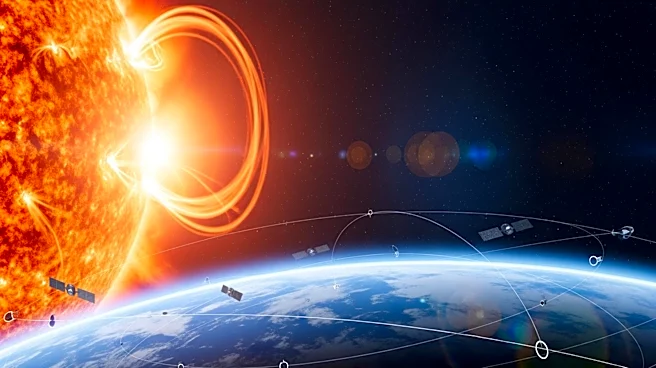
A recent study led by Sarah Thiele at Princeton University highlights the potential for catastrophic satellite collisions in low-Earth orbit, exacerbated by solar storms. The study warns that a geomagnetic
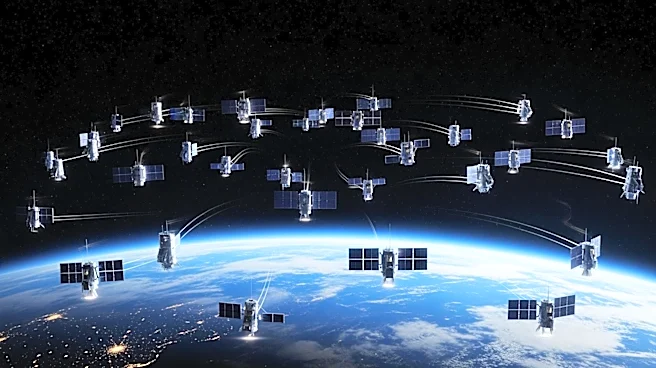
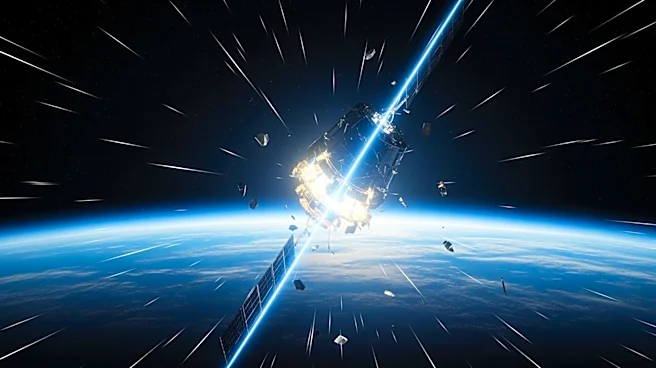
storm could disrupt communications between satellites and their operators, potentially leading to collisions within 2.8 days. This scenario is reminiscent of the Kessler Syndrome, a theoretical cascade of collisions that could severely impact human activity in space. The study notes that SpaceX's Starlink satellites have been performing frequent collision avoidance maneuvers, with 144,404 such actions recorded between December 2024 and May 2025. The research underscores the delicate balance required to maintain satellite operations and the significant risks posed by solar activity.
Why It's Important?
The findings of this study are crucial for the future of space exploration and satellite operations. The potential for collisions could disrupt not only current satellite services but also future space missions, such as NASA's Artemis II. The study highlights the need for robust satellite management systems and the importance of preparing for solar storms, which, although rare, can have devastating effects. The implications extend to industries reliant on satellite technology, including telecommunications, navigation, and weather forecasting. The study serves as a call to action for improved satellite design and operational protocols to mitigate the risks of space debris and ensure the sustainability of space activities.
What's Next?
The study suggests that satellite operators and space agencies need to enhance their preparedness for solar storms and improve communication systems to prevent potential collisions. This may involve developing more resilient satellite technologies and implementing stricter regulations for satellite launches. Additionally, international cooperation may be necessary to address the growing issue of space debris and ensure the long-term viability of space exploration. The study's findings could prompt discussions among policymakers and industry leaders on how to safeguard space infrastructure against natural and man-made threats.