




What's Happening?
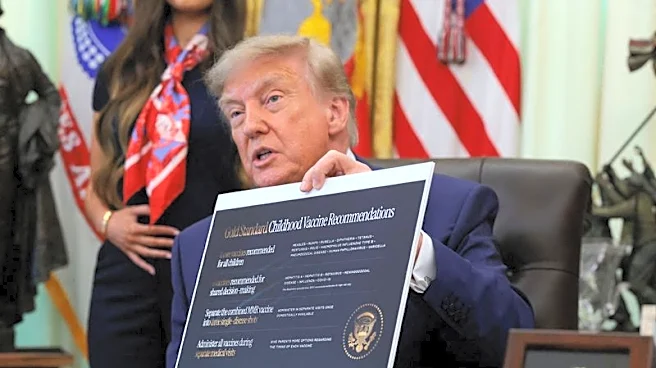
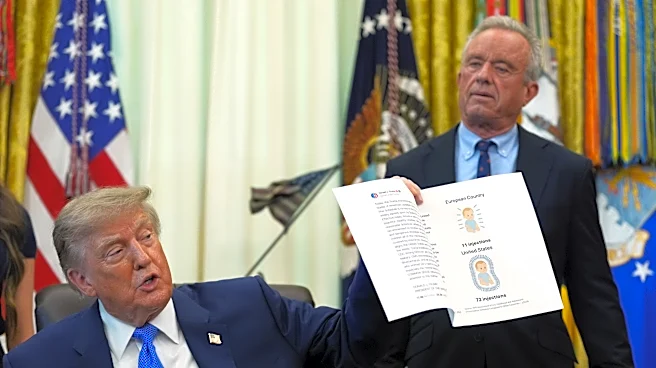
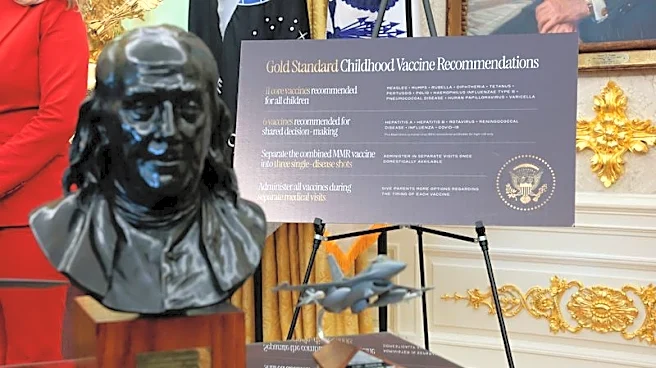
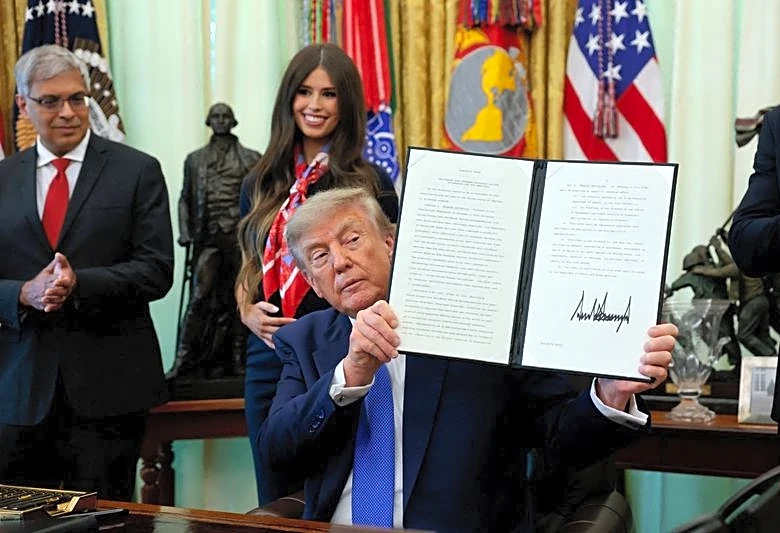
President Donald Trump has signed an executive order advocating for 'more vaccine flexibility' and reducing the number of childhood vaccinations. The order calls for the separation of the measles, mumps, and rubella (MMR) vaccine into three separate shots.
This move follows a blocked attempt to reduce the childhood vaccine schedule from 18 to 11 vaccines. Health experts, including Dr. Michael Osterholm, have criticized the order, emphasizing the lack of scientific evidence supporting the changes and the potential risks of lower vaccination rates. The order aligns with Health and Human Services Secretary Robert F. Kennedy Jr.'s controversial views on vaccines.
Why It's Important?
The executive order reflects ongoing debates over vaccine policies in the U.S., highlighting tensions between public health recommendations and political decisions. The changes could impact public health by potentially lowering vaccination rates and increasing the risk of disease outbreaks. The order also underscores the influence of vaccine skepticism within the current administration, raising concerns among health professionals about the politicization of vaccine policies. The decision may have broader implications for public trust in health recommendations and the administration's approach to health policy.
What's Next?
The implementation of the executive order will likely face legal and scientific scrutiny, as health experts and organizations advocate for evidence-based vaccine policies. The administration may encounter resistance from public health officials and legal challenges similar to those faced in March. The ongoing debate over vaccine policies will continue to be a contentious issue, with potential implications for future public health initiatives and the administration's credibility in handling health crises.