





What's Happening?
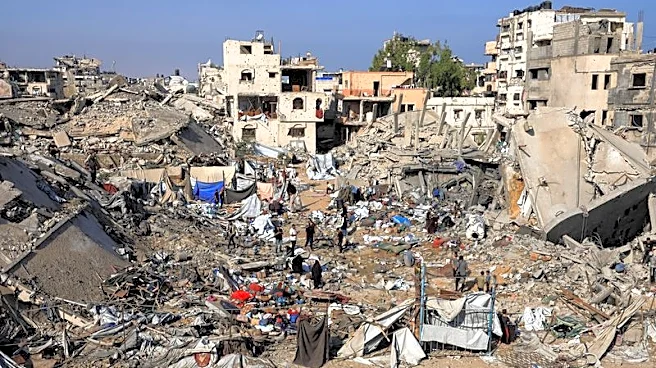
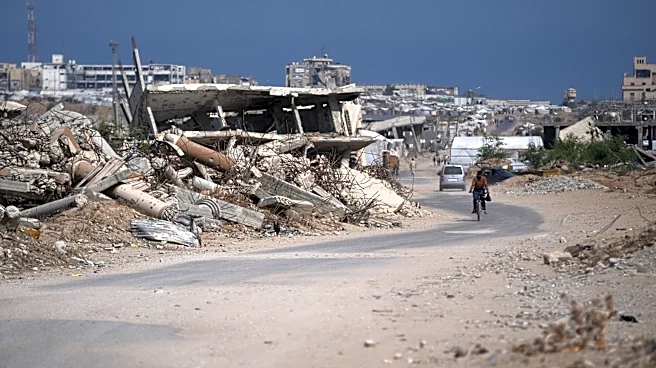
Pakistan's Prime Minister Shehbaz Sharif has expressed support for the developments under the Board of Peace towards implementing the Gaza Peace Plan. The plan, announced by President Trump, involves a phased disarmament agreement with Hamas, mediated
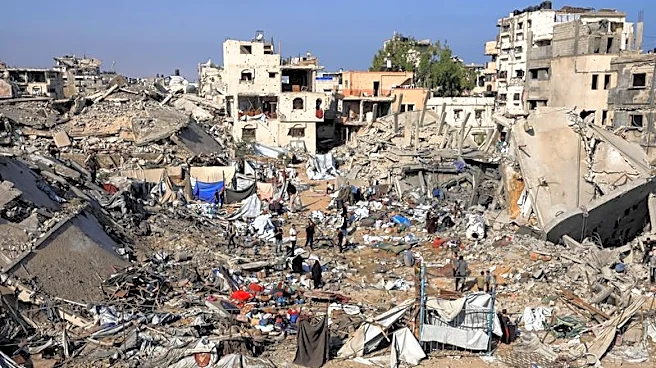
by the US, Egypt, Qatar, and Turkiye. The Board of Peace, established in January, aims to oversee the ceasefire and reconstruction of Gaza. Pakistan, a founding member of the board, hopes the plan will lead to the establishment of an independent Palestinian state based on pre-1967 borders, with Al-Quds Al-Sharif as its capital.
Why It's Important?
Pakistan's endorsement of the Gaza Peace Plan underscores its commitment to supporting Palestinian self-determination and regional stability. The plan's success could lead to significant geopolitical shifts in the Middle East, potentially easing tensions between Israel and Palestine. The involvement of multiple countries in the Board of Peace highlights the international community's interest in resolving the Gaza conflict. However, the plan's implementation faces challenges, including skepticism from Israel and concerns about the board's mandate.
What's Next?
The next phase involves further negotiations to ensure compliance with the disarmament agreement. The Board of Peace will continue to oversee the process, with Pakistan and other member countries playing a role in supporting the plan's implementation. The international community will monitor the situation closely, and any setbacks could impact the broader peace process in the Middle East.
Beyond the Headlines
The Board of Peace's establishment and its potential to replace the United Nations in peacekeeping roles have raised concerns about its mandate and powers. The board's ability to navigate complex geopolitical dynamics and uphold international law will be critical to its success. The plan's implementation could redefine international involvement in Gaza and influence future peace efforts in the region.