



What's Happening?
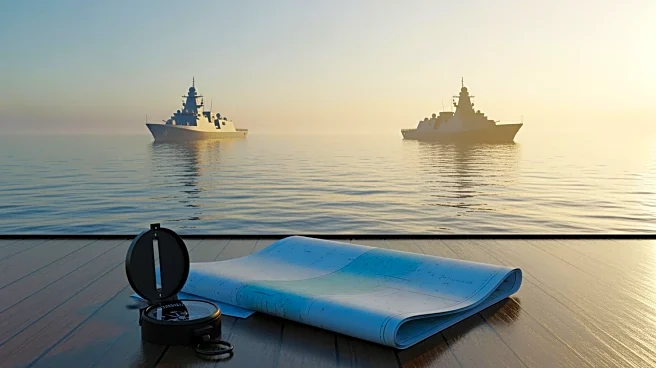
China has deployed naval forces in the South China Sea, coinciding with a joint maritime exercise conducted by the United States and the Philippines. The U.S. Navy's 7th Fleet and the Armed Forces of the Philippines engaged in a Maritime Cooperative Activity
(MCA) to support a free and open Indo-Pacific. The exercise took place in the waters of the Philippines, involving the U.S. Navy destroyer USS John Finn and the Philippine frigate BRP Antonio Luna, among other units. China, asserting its territorial claims, conducted routine naval patrols in the region, emphasizing its commitment to safeguarding its sovereignty and maritime rights.
Why It's Important?
The South China Sea is a strategic and contested region, with overlapping territorial claims from China and several Southeast Asian countries, including the Philippines. China's assertive military presence and the U.S.-Philippines joint exercises highlight ongoing tensions and the geopolitical significance of the area. The U.S. and its allies, such as Australia and Japan, regularly challenge China's claims by deploying forces to ensure freedom of navigation. This situation underscores the broader power dynamics in the Indo-Pacific, affecting regional security and international maritime law.
What's Next?
Both China and the U.S. are expected to maintain their military presence in the South China Sea, with potential for further encounters as they assert their respective interests. The ongoing military activities could lead to diplomatic engagements or further tensions, depending on the actions of regional stakeholders and international responses.