
What's Happening?
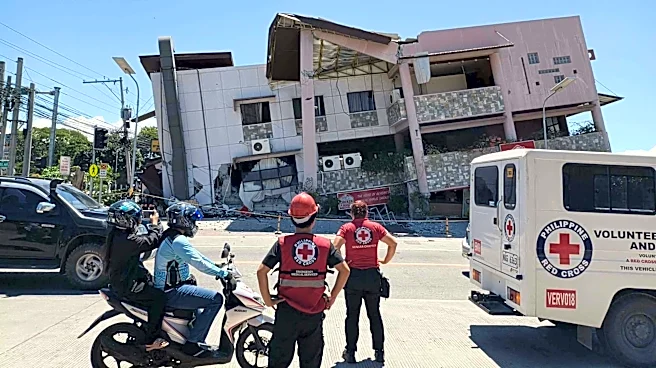
A powerful 7.8 magnitude earthquake struck off the southern Philippine island of Mindanao, resulting in at least 32 deaths and numerous injuries. The earthquake, which occurred early in the morning, triggered
tsunami warnings across several countries, including the Philippines, Indonesia, and Malaysia. The epicenter was located about 20 kilometers off Sarangani province, with tremors felt strongly across Mindanao and as far as Manado on the Indonesian island of Sulawesi. The Philippine government has mobilized military and disaster response teams to conduct search and rescue operations. Tsunami warnings were later canceled after authorities verified the situation.
Why It's Important?
The earthquake highlights the vulnerability of the Philippines, which is situated on the Pacific 'Ring of Fire,' a region known for its seismic activity. The disaster underscores the need for robust emergency preparedness and response strategies in the region. The immediate impact includes loss of life, injuries, and significant damage to infrastructure, which could have long-term economic implications for the affected areas. The event also serves as a reminder of the importance of international cooperation in disaster response, as neighboring countries issued tsunami warnings and prepared for potential impacts.
What's Next?
The Philippine government, led by President Ferdinand Marcos Jr, has ordered an immediate disaster response, including the preparation of relief supplies and evacuation centers. Authorities are currently assessing the full extent of the damage, and ongoing aftershocks are complicating these efforts. The international community, including Malaysia, has expressed readiness to assist in the relief efforts. The focus will be on providing aid to the affected populations and rebuilding damaged infrastructure.