

What's Happening?
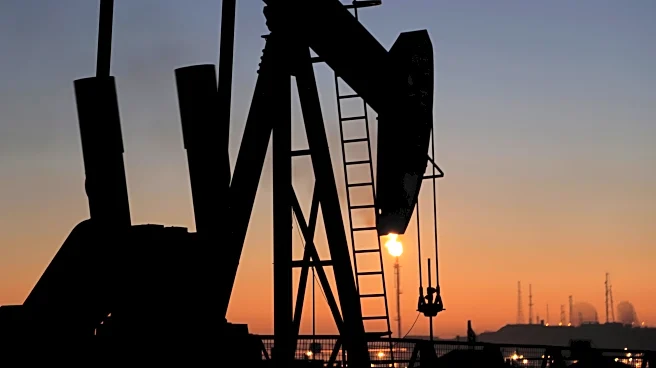
Saudi Arabia has begun reducing its oil production as the Strait of Hormuz remains largely closed due to ongoing conflicts in the Middle East. This strategic chokepoint's near-standstill has forced Saudi Arabia and other OPEC nations, including the UAE,
Kuwait, and Iraq, to lower output. Saudi Aramco is diverting shipments through alternative routes, such as Yanbu in the Red Sea, but the pipeline capacity is insufficient to replace the usual export volumes. The situation has led to a surge in oil prices above $100 per barrel, causing supply chain chaos and increasing the risk of global inflation.
Why It's Important?
The reduction in Saudi oil production is significant as it highlights the fragility of global oil supply chains and the potential for geopolitical conflicts to disrupt energy markets. As one of the world's largest oil producers, Saudi Arabia's actions can have widespread implications for global oil prices and economic stability. The situation underscores the importance of diversifying energy sources and securing alternative supply routes to mitigate the impact of regional conflicts on global markets. Countries reliant on oil imports may face increased costs, affecting economic growth and consumer prices.
What's Next?
With the Strait of Hormuz remaining a critical chokepoint, the global oil market may continue to experience volatility. Saudi Arabia and other affected countries may need to explore further alternative routes and storage solutions to maintain supply. International efforts to stabilize the region and ensure the free flow of oil are likely to intensify. Stakeholders, including governments and oil companies, will closely monitor developments and may consider strategic reserves or diplomatic interventions to address the ongoing disruptions.