



What's Happening?
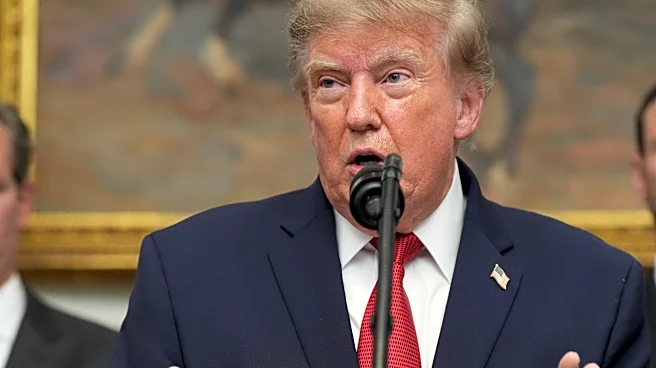
President Trump and his former personal lawyer, Michael Cohen, are set to have their first public conversation in over eight years, following a period of intense animosity. Cohen, who once described himself as President Trump's 'pit bull,' later became
a vocal critic, exposing what he termed 'dirty deeds' and testifying against President Trump. This led President Trump to label Cohen a 'rat.' The upcoming conversation will air as a taped phone interview on Cohen's WABC radio program, lasting 40 minutes. Cohen stated that the reconciliation involved forgiveness, though not amnesia, and that their relationship is 'being resuscitated.' This development follows President Trump's conviction on 34 counts of falsifying business records related to hush money payments, a case in which Cohen was a key witness. Cohen has also submitted an updated pardon application, which he intends to follow up on.
Why It's Important?
This public conversation between President Trump and Michael Cohen carries significant political and social implications. For President Trump, a reconciliation with a former insider who became a prominent critic could be seen as an attempt to mend fences and potentially consolidate support, especially as he navigates legal challenges and future political endeavors. For Cohen, this marks a notable shift from his previous role as a key witness against President Trump, potentially altering public perception of his motivations and future actions. The discussion of a pardon application also highlights the ongoing legal complexities surrounding President Trump's associates and the potential for political influence on judicial outcomes. This event could influence public discourse on loyalty, betrayal, and forgiveness within political circles, and may set a precedent for how former adversaries engage in public dialogue, particularly in a highly polarized political landscape. It also underscores the personal dimensions of political conflicts, where relationships can evolve dramatically over time.
What's Next?
The airing of President Trump's interview on Michael Cohen's radio program is expected to generate considerable media attention and public discussion. Following the broadcast, there will likely be extensive analysis of the content of their conversation, including any new revelations or shifts in their respective narratives. Cohen's intention to follow up on his pardon application suggests that legal and political maneuvering will continue to be a significant aspect of this evolving relationship. Reactions from various political figures, media commentators, and the public will be closely watched, as they could indicate broader shifts in political alliances or public sentiment. Depending on the nature of their conversation, this event could either pave the way for further reconciliation or reignite past controversies. The long-term impact on President Trump's political standing and Cohen's public image will depend on how this public détente is perceived and whether it leads to any tangible outcomes, such as a pardon or a more sustained working relationship.
Beyond the Headlines
Beyond the immediate political spectacle, the reconciliation between President Trump and Michael Cohen touches upon deeper themes of redemption, political pragmatism, and the nature of public forgiveness. The narrative of a former 'pit bull' turned 'rat' now engaging in a public conversation with his former boss challenges conventional understandings of political loyalty and animosity. It raises questions about the authenticity of such reconciliations, particularly when legal and political stakes are high. The event could also be interpreted as a strategic move by both parties, highlighting the fluid and often transactional nature of political relationships. Furthermore, it underscores the power of media platforms, even radio, to shape public narratives and facilitate unexpected dialogues between prominent figures. The public's reaction to this rapprochement will offer insights into societal attitudes towards forgiveness and accountability in the context of high-profile political conflicts, and whether past transgressions can truly be set aside for future collaboration.