

What's Happening?
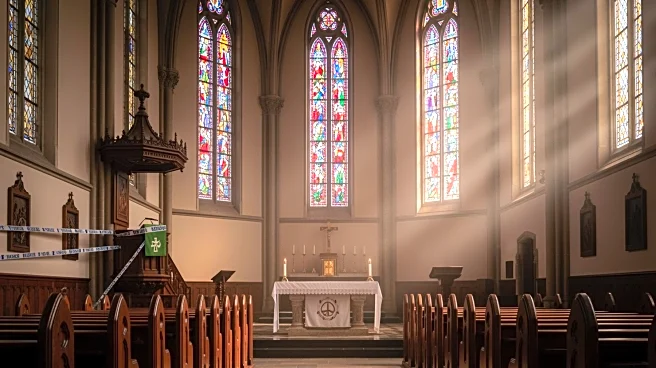
Archbishop José H. Gomez of Los Angeles conducted a 'Mass for Peace' at Our Lady of the Angels, coinciding with student protests against President Trump's immigration policies. The mass was a call for unity and prayer for immigrants, government leaders,
and law enforcement. The event took place as over 500 students marched to the Metropolitan Detention Center, protesting the administration's aggressive immigration enforcement. The students, many of whom are from immigrant families, expressed their fears and frustrations over the current policies. The Los Angeles archdiocese, the largest in the U.S., has a significant immigrant and Latino population, making the issue particularly resonant. Archbishop Gomez, a prominent Latino Catholic leader, emphasized the need for compassion and awareness among Americans regarding the plight of immigrants.
Why It's Important?
The mass and protests highlight the ongoing tension between religious communities and the Trump administration's immigration policies. The Catholic Church, particularly in immigrant-rich areas like Los Angeles, plays a crucial role in advocating for immigrant rights and providing support to affected communities. The event underscores the broader societal divide over immigration, with faith leaders increasingly vocal against policies they view as unjust. The Catholic Church's stance could influence public opinion and policy, given its significant following and moral authority. The protests also reflect the growing activism among young people, who are directly impacted by these policies and are increasingly taking a stand.
What's Next?
The Catholic Church may continue to play a pivotal role in advocating for immigration reform, potentially increasing its involvement in political discourse. The protests could inspire further activism among students and other community groups, potentially leading to more organized efforts to challenge current policies. The administration's response to such demonstrations could also shape future immigration policy and enforcement strategies. Additionally, the church's actions might prompt other religious and civic organizations to join the call for more humane immigration practices.
Beyond the Headlines
The event highlights the complex relationship between religion and politics in the U.S., particularly how religious institutions navigate their roles in social justice issues. The Catholic Church's involvement in immigration advocacy reflects a broader trend of faith-based organizations engaging in political activism. This could lead to a reevaluation of the church's role in public life, especially as it balances its spiritual mission with social and political advocacy. The situation also raises questions about the effectiveness of prayer and religious gatherings in enacting social change, and how these actions are perceived by both supporters and critics.