
What's Happening?
Starting in July 2026, the U.S. government will introduce 'Trump accounts' for newborns, seeding each account with $1,000 for children born between 2025 and 2028. These accounts are designed to encourage
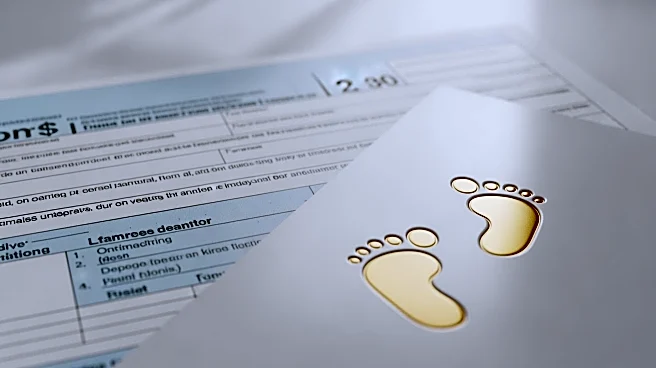
savings for future expenses. Parents, grandparents, and others can contribute up to $5,000 annually, with employers allowed to contribute up to half of that amount. However, contributions to these accounts do not qualify for the annual gift tax exclusion, necessitating the filing of a gift tax return, Form 709, for each contribution. This requirement poses a significant tax compliance issue, as Form 709 is not typically available on common tax platforms and may require professional assistance, potentially increasing costs for contributors.
Why It's Important?
The introduction of Trump accounts represents a significant policy aimed at promoting long-term savings among American families. However, the associated tax compliance requirements could deter contributions, as individuals must navigate the complexities of filing Form 709. This could lead to increased costs for those who choose to contribute, as they may need to hire accountants to manage the paperwork. The policy's success in encouraging savings may be undermined by these administrative hurdles, potentially affecting the financial planning strategies of families. Additionally, the lack of tax deductions for contributions and the taxation of withdrawals could make alternative savings options, such as Roth IRAs or 529 plans, more attractive.
What's Next?
Without legislative changes, the current tax compliance requirements for Trump accounts will remain in place. This could prompt calls for Congress to amend the rules to simplify the process and encourage more contributions. Financial advisors may also play a crucial role in guiding families on the most effective savings strategies, weighing the benefits of Trump accounts against other options. As the accounts become operational, the government and financial institutions will likely monitor participation rates and feedback to assess the program's impact and identify areas for improvement.