



What's Happening?
Six months into the Ebola outbreak caused by the Bundibugyo virus in the Democratic Republic of Congo (DRC), significant progress has been made in delivering life-saving services to affected communities. Despite these advancements, the outbreak continues
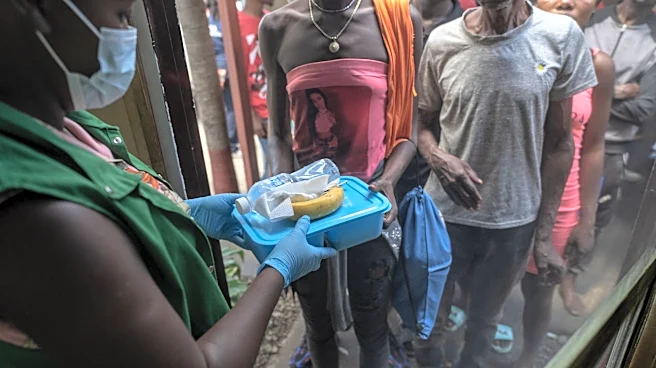
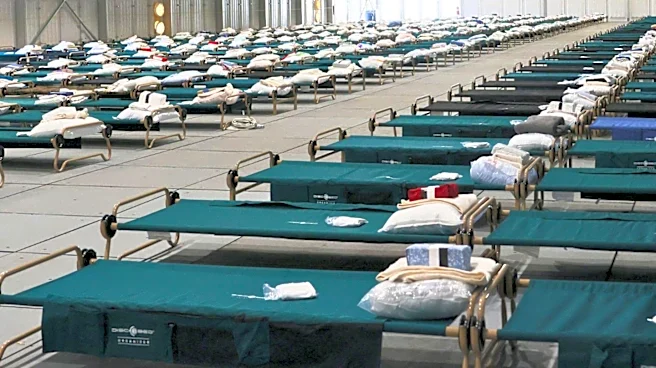
to expand, particularly in affected areas, fueled by ongoing conflict, displacement, and humanitarian needs. Over 11,000 cases and 5,400 deaths have been reported, with children accounting for more than a quarter of confirmed cases and one-third of deaths. The response has successfully slowed transmission in initial epicenters like Mongbwalu, Nyankunde, Nizi, Rwampara, and Butembo, and even in Bunia, new cases have halved. Diagnostic capacity has expanded from two laboratories to over two dozen, and nearly 2,000 treatment beds are now available. However, contact follow-up remains below target, and two-thirds of confirmed deaths occur in communities, indicating late identification of infections. Insecurity, including attacks on health workers and facilities, continues to be a major obstacle, disrupting operations and leading to lost contacts and unaccounted-for cases.
Why It's Important?
This report underscores the dual nature of humanitarian crises, where medical advancements are often undermined by geopolitical instability and social factors. The progress in containing Ebola in some areas demonstrates the effectiveness of coordinated international and local efforts, including expanded diagnostic capabilities and treatment infrastructure. However, the continued spread of the virus, particularly among children, highlights the vulnerability of populations in conflict zones and the critical need for comprehensive humanitarian aid beyond just medical intervention. The high number of community deaths indicates a persistent challenge in early detection and access to care, suggesting that fear, mistrust, or lack of infrastructure prevents people from seeking help. The attacks on healthcare workers and facilities are particularly alarming, as they not only endanger lives but also severely impede the ability to control the outbreak, prolonging suffering and increasing the risk of wider regional spread. This situation emphasizes the interconnectedness of health, security, and humanitarian access.
What's Next?
To effectively halt the Ebola outbreak, a sustained and multi-faceted response is crucial. A halt in hostilities is urgently needed to protect communities and health workers, ensuring safe access for humanitarian operations. The response must empower affected communities with the knowledge, tools, and resources to combat Ebola, while also addressing broader challenges such as violence, hunger, and weaknesses in the health system. International support and flexible funding must be sustained through 2027, alongside political commitment and meaningful community participation. The next phase of the response will focus on building upon the progress made over the past six months, accelerating efforts to reach communities still beyond the effective reach of current interventions. This includes strengthening surveillance, contact tracing, risk communication, and community engagement. Addressing wider humanitarian needs, such as food security, water and sanitation, child protection, and mental health, will also be critical to achieving a lasting resolution to the crisis.
Beyond the Headlines
The ongoing Ebola outbreak in the DRC serves as a stark reminder of the complex interplay between public health emergencies, conflict, and humanitarian access. The challenges faced by responders, including insecurity and community mistrust, highlight the ethical dilemmas inherent in delivering aid in volatile environments. The disproportionate impact on children, with a high mortality rate among those under five, points to systemic vulnerabilities and the need for targeted interventions that consider the specific needs of different age groups. The report also implicitly raises questions about the long-term sustainability of international aid efforts and the importance of building robust local health systems that can withstand crises. The scientific advancements in treatments and vaccines offer hope, but their effectiveness is severely limited without secure access and community cooperation. This situation underscores the critical need for integrated approaches that combine medical expertise with peacebuilding efforts and comprehensive humanitarian support to address the root causes of vulnerability.