



What's Happening?
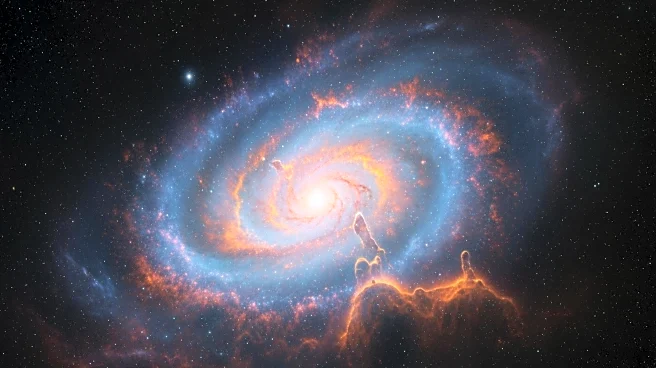
The James Webb Space Telescope has provided a detailed near-infrared image of the Helix Nebula, offering insights into the structure of gas being shed by a dying star. This high-resolution image reveals the interaction between fast-moving hot gas and
slower-moving colder shells of dust and gas, sculpting the nebula's structure. The Helix Nebula, located 650 light-years away in the constellation Aquarius, is a popular target for astronomers due to its proximity and resemblance to the 'Eye of Sauron.' The image highlights the transition from hot ionized gas near the central white dwarf to cooler molecular hydrogen farther out, with the outer edges showing the coolest material where dust can form. This observation enhances understanding of how stars recycle material back into the cosmos, contributing to the formation of new stars and planets.
Why It's Important?
The James Webb Space Telescope's observations of the Helix Nebula provide critical data on the life cycle of stars and the processes that lead to the formation of new celestial bodies. By examining the interactions within the nebula, scientists can better understand the mechanisms of stellar evolution and the recycling of cosmic material. This knowledge is vital for comprehending the origins of planetary systems and the potential for life in the universe. The Webb Telescope's capabilities allow for unprecedented detail in these observations, advancing the field of astronomy and informing future research and exploration missions.