










What's Happening?
A family in Norton, County Durham, England, uncovered a World War II-era Anderson shelter beneath their garden shed. The discovery was made when Phoebe Smyrell and her family decided to dismantle the deteriorating shed, which had been in place since before
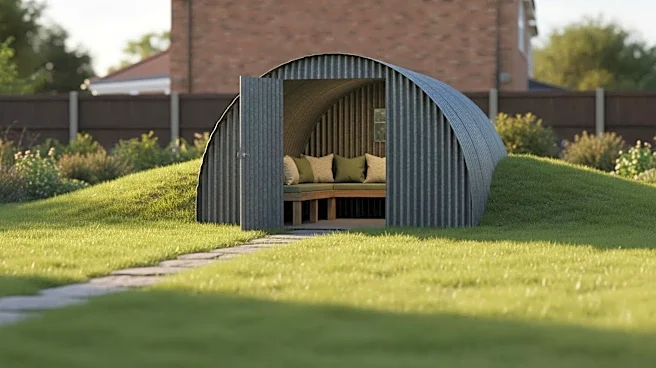
they moved into their 1935 home. The previous owners had mentioned the existence of the shelter, but it had never been explored. Anderson shelters were introduced in the U.K. in 1939 to protect civilians during German bombing raids. These shelters were typically made from prefabricated corrugated steel panels and buried underground. The Smyrell family's shelter was found to be larger and more complete than expected, containing old tools, metal bits, and a plumbing system. The family plans to restore the shelter, with ideas ranging from turning it into a movie snug to a sauna.
Why It's Important?
The discovery of the WWII bunker highlights the historical significance and durability of Anderson shelters, which were crucial for civilian protection during air raids. This find not only serves as a tangible connection to the past but also underscores the ingenuity and resilience of those who constructed these shelters. For the Smyrell family, the shelter represents a unique opportunity to preserve a piece of history while potentially repurposing it for modern use. The restoration project could inspire others to explore and preserve historical structures, contributing to cultural heritage and education.
What's Next?
The Smyrell family is currently working on making the shelter watertight and plans to continue restoration efforts. They are considering professional help to unblock drains and ensure the shelter's structural integrity. The family intends to install a smaller shed to maintain access to the shelter, allowing for ongoing restoration work. The project has garnered interest on social media, where Phoebe Smyrell documents the progress, potentially attracting attention from history enthusiasts and preservationists.