






What's Happening?
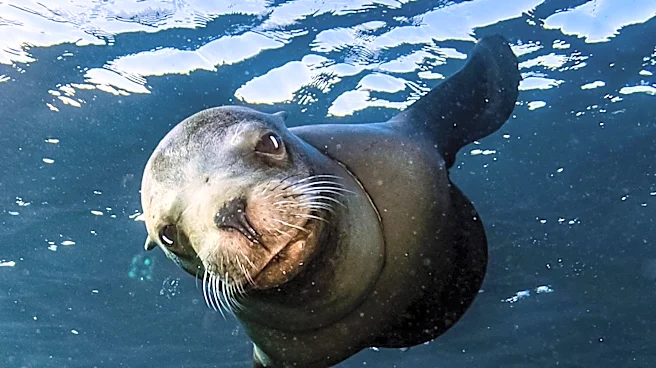
The U.S. House Natural Resources Committee has approved the Northwest Endangered Salmon Predation Prevention Act, a bill aimed at expanding the culling of seals and sea lions that prey on salmon populations. U.S. Representative Bruce Westerman (R-Arkansas)
stated that current law limits the geographic scope of lethal management on the Columbia River, leading to unmitigated predation in key areas. The legislation seeks to address this by making it easier for Washington state and Tribal authorities to kill marine mammals and increasing the areas where culling can occur. This bill builds upon a 2018 law that authorized state and Tribal governments to cull sea lions in parts of the Columbia River basin. While NOAA Fisheries reported that the 2018 cullings saved an estimated 110,000 adult salmon, the agency acknowledged a limited impact on overall fish recovery. The new legislation expands the scope to include seals and broadens the areas for culling, moving beyond the specific choke points targeted by the previous law.
Why It's Important?
This legislation is significant for salmon recovery efforts in the Pacific Northwest, particularly for the Columbia River basin, where salmon populations are endangered. The bill aims to provide greater flexibility to tribal and local managers in addressing pinniped predation, which is seen as a major impediment to salmon recovery despite other conservation efforts. The expansion of culling to include seals and a wider geographic area reflects a more aggressive approach to managing marine mammal populations to protect fish. This could have substantial implications for the region's ecosystem, potentially altering the balance between predator and prey species. Furthermore, the bill's support from the Columbia River Inter-Tribal Fish Commission and the Northwest Indian Fisheries Commission highlights the importance of salmon to tribal communities, who often hold treaty fishing rights and rely on healthy salmon runs for cultural and economic sustenance. However, environmental groups like Oceana criticize the bill, arguing that culling is not a scientifically defensible solution and diverts attention from other critical factors affecting salmon, such as dams, habitat degradation, fishing, and climate change.
What's Next?
The Northwest Endangered Salmon Predation Prevention Act will now proceed to the full U.S. House of Representatives for consideration. If passed by the House, it would then move to the Senate. During the committee markup, U.S. Representative Jared Huffman (D-California) expressed concerns about the need for more stakeholder engagement and clearer scientific certainty before expanding the culling program, particularly regarding its effectiveness in marine and coastal waters. An amendment was adopted to limit the legislation's application to freshwater areas and to recognize previously negotiated Tribal roles in pinniped management. Additionally, an amendment was adopted directing NOAA Fisheries to study sea lion predation along the Oregon coast. The bill's proponents, including U.S. Representative Michael Baumgartner (R-Washington), hope for continued bipartisanship to get the bill signed into law before the end of the current Congress. The debate is likely to continue regarding the scientific basis for expanded culling and the potential ecological impacts.
Beyond the Headlines
The debate surrounding the Northwest Endangered Salmon Predation Prevention Act touches upon deeper ethical and scientific considerations regarding wildlife management and conservation. While proponents emphasize the immediate need to protect endangered salmon populations and support tribal fishing rights, critics argue that culling marine mammals addresses a symptom rather than the root causes of salmon decline. This highlights a fundamental tension between managing specific predator-prey dynamics and addressing broader environmental issues like habitat loss and climate change. The legislation also raises questions about the role of scientific evidence in policy-making, with some lawmakers calling for more current data and analysis on pinniped populations and the effectiveness of culling. The long-term implications of such interventions on marine ecosystems and biodiversity are complex and could lead to unforeseen consequences, prompting a re-evaluation of conservation strategies that prioritize one species over another without a holistic approach.