
What's Happening?
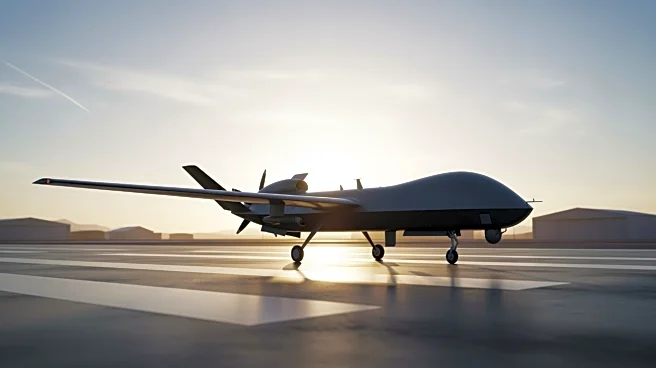
A Bayraktar TB2 unmanned aerial vehicle (UAV), manufactured by the Turkish company Baykar, was showcased at a UAE Air Force and Air Defence (AFAD) base for the first time. This development was revealed
in a video released by the UAE's state-owned defense company, Edge Group, on December 31. The video depicted military personnel maneuvering the UAV out of a hangar, likely at Liwa Air Base, with small guided bombs under each wing. The Bayraktar TB2 is known for its distinctive air intakes on either side of its engine, differentiating it from similar models like the Reach-S UAV. The footage also included an Emirati woman, identified as a first lieutenant, piloting a UAV under the supervision of a civilian instructor. This event marks a significant moment in UAE-Turkey defense relations, highlighting the UAE's interest in integrating advanced UAV technology into its military operations.
Why It's Important?
The appearance of the Bayraktar TB2 at a UAE airbase underscores a growing defense collaboration between the UAE and Turkey. This move could have significant implications for regional security dynamics, as the Bayraktar TB2 has been a pivotal asset in various military operations globally. For the UAE, acquiring such technology enhances its military capabilities, providing a strategic advantage in surveillance and combat operations. This development may also influence the defense market in the Middle East, as other nations observe the UAE's adoption of Turkish UAV technology. The collaboration could lead to further defense agreements and technology transfers between the two countries, potentially reshaping alliances and defense strategies in the region.
What's Next?
The introduction of the Bayraktar TB2 at a UAE airbase may lead to increased military cooperation between the UAE and Turkey. Future steps could involve joint training exercises, further procurement of Turkish defense technology, and potential co-development projects. The UAE's defense strategy might increasingly incorporate UAVs, prompting adjustments in military tactics and operational planning. Additionally, this development could prompt reactions from other regional powers, potentially influencing their defense procurement strategies and diplomatic relations with both the UAE and Turkey.