







What's Happening?
The humuhumunukunukuāpuaʻa, also known as the reef triggerfish (Rhinecanthus rectangulus), is Hawaii's official state fish, a title it regained permanently in 2006 after an initial designation in 1985 that expired in 1990. This fish is notable for its
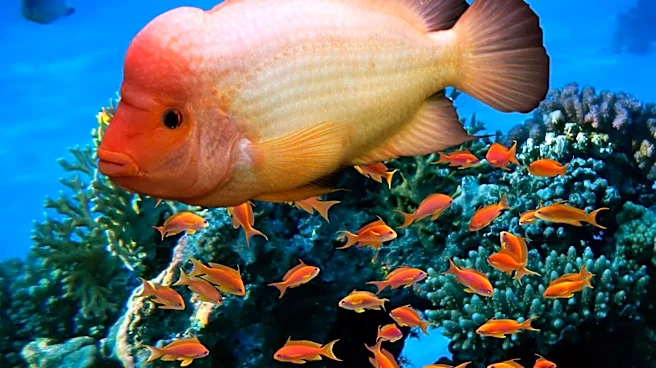
distinctive appearance, featuring bold black-and-gold markings, and its exceptionally long Hawaiian name, which translates to 'triggerfish with a snout like a pig.' The name itself is longer than the fish's body, reflecting its physical characteristics. Beyond its unique nomenclature, the humuhumunukunukuāpuaʻa possesses a remarkable defense mechanism: it can lock its dorsal spine upright and wedge itself into reef cracks, making it nearly impossible for predators to dislodge. This 'trigger' mechanism is where triggerfish derive their common name. These fish are year-round residents of Hawaii's reefs, including popular snorkeling spots like Molokini Crater and Turtle Town.
Why It's Important?
The humuhumunukunukuāpuaʻa's status as Hawaii's state fish highlights the deep connection between Hawaiian culture, language, and its natural environment. Its unique name serves as a linguistic and cultural touchstone, embodying the descriptive richness of the Hawaiian language. Ecologically, the fish is an integral part of Hawaii's marine ecosystem, contributing to the biodiversity of its coral reefs. Its presence in popular tourist destinations also makes it a symbol of Hawaii's natural beauty and a draw for eco-tourism, particularly snorkeling and diving. The story of its designation, lapse, and re-designation as the state fish reflects the community's enduring appreciation for this distinctive marine creature and its role in local identity. Understanding and protecting such species is vital for maintaining the health of Hawaii's unique marine habitats.
What's Next?
Conservation efforts and responsible tourism practices will continue to be crucial for the humuhumunukunukuāpuaʻa and its reef habitat. Educational initiatives, often through local tour operators and marine conservation groups, will likely emphasize respectful interaction with marine life, such as observing from a distance and avoiding touching reef fish or coral. As a symbol of Hawaii, the fish will continue to be featured in educational materials and cultural representations, reinforcing its importance to both the natural world and human heritage. Ongoing scientific research may further uncover details about its behavior, ecological role, and population dynamics, contributing to more effective conservation strategies for Hawaii's coral reefs.
Beyond the Headlines
The humuhumunukunukuāpuaʻa embodies a broader narrative about the importance of indigenous language and ecological preservation. The effort to correctly pronounce and understand its Hawaiian name connects individuals to the rich linguistic heritage of the islands, fostering a deeper appreciation for Hawaiian culture. Furthermore, the fish's unique defense mechanism serves as a natural marvel, illustrating the intricate adaptations found in marine life. Its story also subtly highlights the challenges of balancing tourism with environmental protection; while it attracts visitors, the need for responsible interaction is paramount to ensure its continued presence. This small reef fish, therefore, represents not just a species, but a confluence of cultural identity, ecological resilience, and the ongoing dialogue between human activity and natural conservation in Hawaii.