



What's Happening?
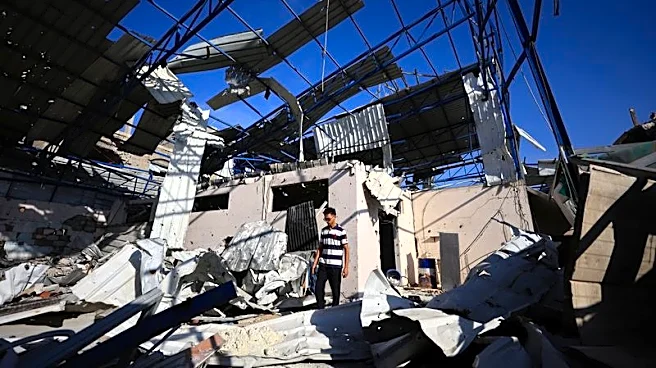
Agronomist Salama Ayesh Muhanna is working to reconstruct the Al-Qarara seed bank in Gaza, which was destroyed during recent bombardments. Muhanna, along with his daughter Hanadi and other farmers, is collecting and preserving local plant seeds from a tent
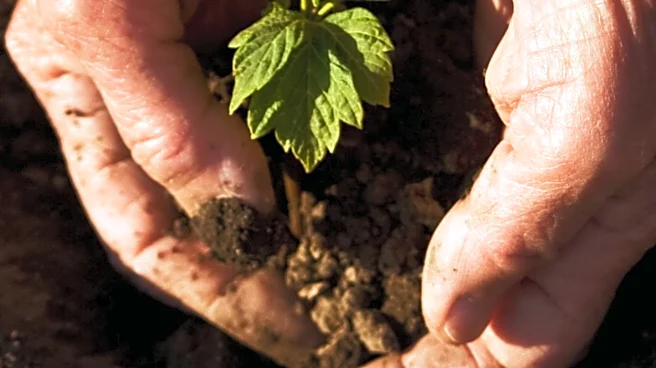
in a displacement camp in Deir al-Balah. The original seed bank, established in 2017, housed 70 tons of various seeds, including cowpeas, watermelon, and sage, along with necessary equipment, all of which were lost. The current effort focuses on gathering local varieties of wheat, okra, and spinach, which are more resilient to drought, fungi, and pests. This initiative aims to protect Palestine's agricultural heritage and support farmers in achieving self-sufficiency, especially as Gaza faces severe food insecurity, with 1.2 million people affected and less than 5% of agricultural land accessible. The project also contends with challenges posed by climate change, which can delay planting and harvesting schedules.
Why It's Important?
This effort is crucial for addressing the severe food insecurity in Gaza, where a significant portion of the population relies on agriculture for sustenance. The destruction of agricultural infrastructure and restricted access to land, seeds, and fertilizers have exacerbated the crisis. By rebuilding the seed bank, Muhanna is not only preserving indigenous plant varieties that are better adapted to the local environment but also empowering farmers to regain autonomy and self-sufficiency. This initiative provides a vital resource for local communities, enabling them to cultivate their own food despite ongoing conflict and environmental challenges. The project's focus on resilient local seeds offers a sustainable solution to food production, reducing reliance on external aid and strengthening the region's long-term food security. The International Committee of the Red Cross supports this project, highlighting its significance in humanitarian efforts.
What's Next?
The immediate next steps involve continuing to collect and store local seed varieties and expanding the distribution network to more farmers in Deir al-Balah. Approximately 200 farmers have already benefited from Muhanna's seeds, with the understanding that they will return the same quantity after harvest to replenish the bank. The project aims to increase the number of local seed varieties from the current thirty back to the pre-conflict count of 42. Future efforts will also need to address the logistical challenges of farming in a conflict zone, including limited access to land, water scarcity, soil degradation, and the presence of explosive remnants. Continued support from organizations like the International Committee of the Red Cross will be essential for the project's expansion and long-term sustainability, as it strives to establish food sovereignty for the region.
Beyond the Headlines
This initiative transcends immediate humanitarian aid by addressing the deeper issues of cultural preservation and national identity through agriculture. Muhanna views the seeds as embodying his identity, patriotism, and nationality, suggesting that food sovereignty is intrinsically linked to the concept of a true Palestinian state. The project highlights the resilience of communities in the face of extreme adversity, using traditional knowledge to adapt to both conflict and climate change. It underscores the critical role of local seed banks in maintaining biodiversity and ensuring food security in vulnerable regions. Furthermore, the story implicitly critiques the broader geopolitical context that restricts agricultural development and exacerbates humanitarian crises, emphasizing the need for sustainable, community-led solutions that empower local populations to control their food systems.