








What's Happening?
AT&T and AST SpaceMobile have successfully demonstrated a seamless handover between ground cellular and direct-to-device satellite service. This achievement marks a significant step towards providing continuous mobile coverage to standard smartphones,
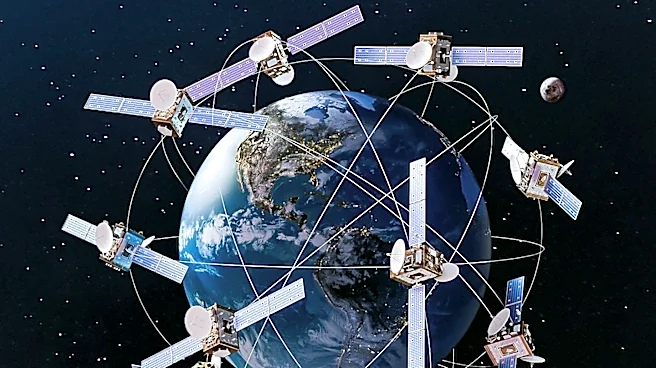
particularly in remote or hard-to-reach areas like national parks. The collaboration aims to integrate 5G, fiber, and AST SpaceMobile’s direct-to-device satellite technology to deliver ubiquitous and resilient connectivity. The test involved establishing a connection on a terrestrial network and then seamlessly transferring that connection to a satellite, allowing a call to continue without interruption even when moving into areas typically lacking coverage. This successful demonstration validates the engineering efforts of both companies in creating a converged connectivity strategy.
Why It's Important?
This development is crucial for addressing connectivity gaps across the United States, especially in rural and underserved regions where traditional cellular infrastructure is limited or non-existent. By enabling standard smartphones to connect directly to satellites, the partnership can extend reliable mobile service to millions of Americans who currently experience intermittent or no coverage. This expanded connectivity has the potential to enhance public safety by providing communication in emergencies, improve economic opportunities in remote areas, and facilitate access to digital services for a broader population. For AT&T, it strengthens its position as a leading connectivity provider, offering a more comprehensive and resilient network. For AST SpaceMobile, it validates its technology and partner-centric model, paving the way for broader adoption and deployment of its space-based cellular broadband network.
What's Next?
Following this successful demonstration, the focus will likely shift towards further validating and scaling the direct-to-device satellite service. AST SpaceMobile has already secured Brazilian spectrum approvals and expanded gateway plans, indicating a global ambition for its technology. The next steps will involve continued testing, regulatory approvals in additional regions, and the eventual commercial rollout of the service. This will likely involve integrating the satellite service more deeply into existing terrestrial networks and expanding the satellite constellation to provide wider and more consistent coverage. The success of this initial handover suggests that the companies are on track to offer a commercially viable solution for continuous mobile connectivity in the near future, potentially unlocking new opportunities across consumer, enterprise, and government markets.
Beyond the Headlines
The successful integration of satellite and terrestrial networks represents a fundamental shift in how mobile connectivity can be delivered. This technology could democratize access to information and services, bridging the digital divide for communities previously left behind. It also raises questions about the future of network infrastructure, potentially reducing the need for extensive ground-based installations in certain areas. Furthermore, the ability to maintain seamless connectivity in challenging environments could have profound implications for disaster response, remote work, and the development of new applications that rely on ubiquitous internet access. This innovation could also spur competition and further advancements in satellite communication technologies, ultimately benefiting consumers with more reliable and widespread mobile services.