





What's Happening?
The U.S. Immigration and Customs Enforcement (ICE) is transitioning from high-profile enforcement operations to a more subdued approach by partnering with local law enforcement agencies. This shift follows the controversial and aggressive tactics used
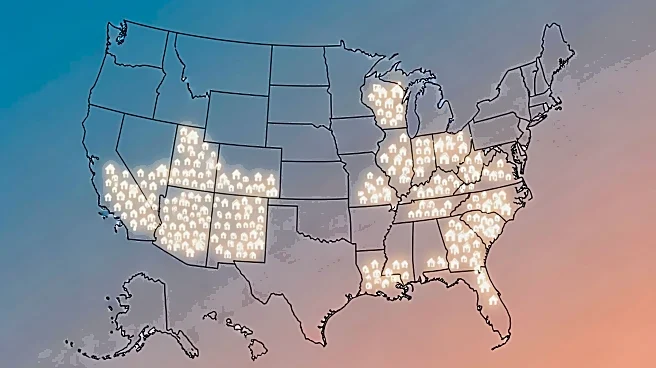
during a recent operation in Minnesota, which faced significant public backlash. The new strategy emphasizes the federal 287(g) program, allowing local police to perform some duties of ICE officers. This program has seen a substantial increase in participation, with over 1,600 agreements across 39 states, particularly in Florida and Texas. These partnerships have led to a significant rise in immigration arrests by local agencies, with Florida reporting at least 10,000 arrests since last August. The approach has sparked concerns about racial profiling and community trust, as local police now play a more active role in immigration enforcement.
Why It's Important?
The shift in ICE's enforcement strategy has significant implications for U.S. immigration policy and community relations. By involving local police in immigration enforcement, the federal government is effectively expanding its reach and capacity to detain undocumented immigrants. This approach may lead to increased racial profiling and erode trust between immigrant communities and law enforcement, potentially discouraging crime reporting and cooperation with police. The strategy also reflects broader political dynamics, as it aligns with President Trump's immigration policies and has been supported by state leaders like Florida Governor Ron DeSantis. However, it has also faced criticism from civil rights groups and some law enforcement officials who worry about the impact on community relations and public safety.
What's Next?
The continued expansion of the 287(g) program and local police involvement in immigration enforcement is likely to face legal and political challenges. Civil rights organizations may increase efforts to oppose these partnerships, citing concerns over racial profiling and community trust. Additionally, states with differing political views on immigration may implement policies to limit or prohibit local law enforcement from participating in federal immigration enforcement. The ongoing debate over immigration policy in the U.S. will likely influence future legislative and executive actions, potentially affecting the scope and nature of ICE's operations.
Beyond the Headlines
The integration of local police into federal immigration enforcement raises ethical and legal questions about the role of law enforcement in immigration policy. It challenges the traditional separation between local policing and federal immigration duties, potentially leading to conflicts over jurisdiction and authority. The approach also highlights the tension between federal and state policies, as some states may resist or reject participation in the 287(g) program. Long-term, this strategy could reshape the landscape of immigration enforcement in the U.S., influencing public perceptions and policy debates on immigration and law enforcement.