
What's Happening?
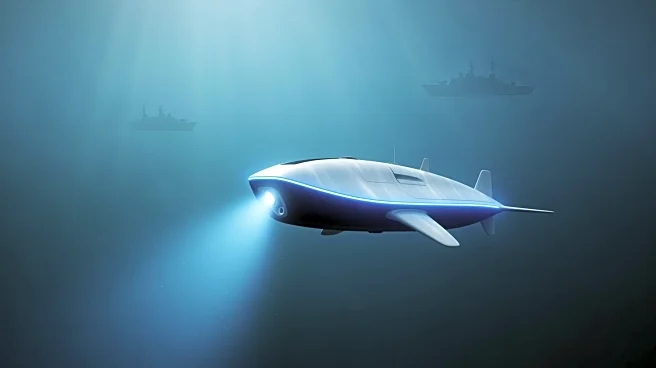
Japan has recently received new unmanned underwater vehicles (UUVs) designed for defense purposes as China continues to expand its naval capabilities. The Japan Maritime Self-Defense Force announced the
delivery of these domestically developed drones, which are part of Japan's strategy to enhance its underwater defense capabilities. The UUVs are expected to be compatible with torpedo tube launch systems, allowing them to be deployed and recovered from submarines. This development comes as China aims to build a 'world-class' military, with a significant naval presence in the western Pacific, including waters near Japan. The Chinese Foreign Ministry has not commented on this development.
Why It's Important?
Japan's acquisition of underwater drones is a strategic move in the context of the First Island Chain strategy, which is a U.S.-conceived plan to deter potential Chinese aggression, particularly concerning Taiwan. The deployment of these drones enhances Japan's defense capabilities and aligns with its commitment to collective self-defense. This move is significant as it reflects the growing military tensions in the region, with Japan and the U.S. seeking to counterbalance China's expanding military influence. The integration of UUVs into Japan's defense strategy could potentially alter the balance of power in the region, affecting geopolitical dynamics and security policies.
What's Next?
The timeline for the deployment of these UUVs with Japanese submarines remains uncertain. However, as Chinese naval forces continue to expand their presence in the western Pacific, Japan's strategic response will be closely monitored by regional and global stakeholders. The development and deployment of these drones could prompt further military advancements and strategic alliances in the region, potentially influencing future defense policies and international relations.





